सीपीएम की क्रांति

सीपीएम की क्रांति
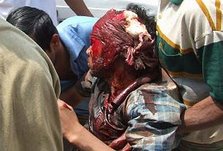
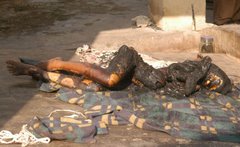
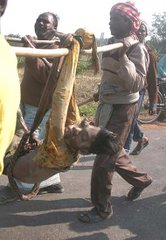
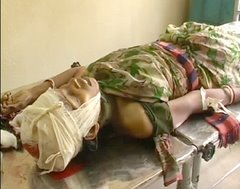
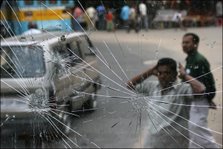
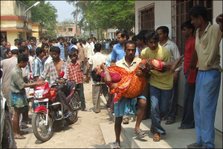
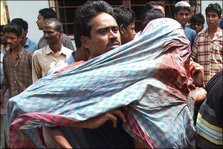
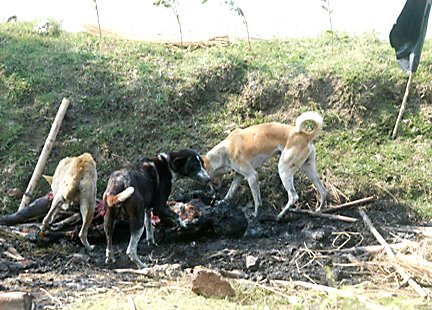
हम एक लोकतंत्र में रह रहे हैं! 14 मार्च को हुई घटना और उसके बाद सीपीएम के बंद के दौरान गायब हुए दो सौ लोगों का अब तक कोई अता-पता नहीं है्. हां। कुछ लाशें हैं जो इलाके में इस हालत में पायी गयी हैं. क्या हम बता सकते हैं कि इन्होंने किस बात की कीमत चुकायी? क्या हम इसको लेकर आश्वस्त रह सकते हं कि हमें भी कभी ऐसी ही कीमत नहीं चुकानी पड़ेगी?
Showing posts with label बातचीत. Show all posts

Thursday, April 5, 2007

यह ठीक-ठीक एक युद्ध है और हर पक्ष अपने हथियार चुन रहा है : अरुंधति राय

प्रख्यात लेखिका और समाजकर्मी अरुंधति राय ने लगातार बदलते वैश्विक परिदृश्य और घटनाक्रम के साथ जिस तरह अपने को मोडिफ़ाइ किया है, और अपने सोच को विकसित किया है, उसका उदाहरण है यह बातचीत. इसमें अरुंधति ने अपने पहले के कई नज़रियों पर नये सिरे से विचार किया है और ज़रूरत पड़ने पर उनको एक दूसरी दिशा भी दी है. जैसे कि उनमें पहले अहिंसक प्रतिरोध की का व्यापक आग्रह दिखता था. वे मानतीं थीं कि प्रतिरोध हिंसक होने से उसकी सुंदरता नष्ट होती है. मगर इस बार वे सरकार द्वारा अहिंसक प्रतिरोधों को नज़रअंदाज़ किये जाने और उनको अपमानित किये जाने से काफ़ी क्षुब्ध दिखती हैं. उनमे अब अहिंसक प्रतिरोध का वह आग्रह नहीं दिखता और वे काफ़ी हद तक देश में चल रहे सशस्त्र आंदोलनों के पक्ष में बोलती दिखती हैं. उनका यह बदलाव उन जड़ बुद्धि महामानवों, इसी युग के, के लिए एक नज़ीर है, जिन्होंने एक बार एक ढेरी चुन ली तो जीवन भर उस पर कुंडली मारे बैठे रहते हैं, उसकी गर्द साफ़ करने को भी उससे नहीं डोलते. अंगरेज़ी साप्ताहिक तहलका में छपी यह बातचीत हिंदी में जन विकल्प के अप्रैल अंक में प्रकाशित हुई है. यहां इसकी साभार प्रस्तुति.

  • अनुवाद : रेयाज-उल-हक
शोमा चौधरी : पूरे देश में बढ़ती हुई हिंसा का माहौल है. आप संकेतों को किस तरह ले रही हैं? इन्हें किस परिप्रेक्ष्य में लेना चाहिए?
अरुंधति राय : आप उतने प्रतिभासंपन्न नहीं हो सकते कि आप संकेतों को पढ़ सकें. हमारे पास उग्र उपभोक्तावाद और आक्रामक लिप्सा पर पलता हुआ एक बढ़ता मध्यवर्ग है. पश्चिमी देशों के औद्योगीकरण के विपरीत, जिनके पास उनके उपनिवेश थे, जहां से वे संसाधन लूटते थे और इस प्रक्रिया की खुराक के लिए दास मजदूर पैदा करते थे, हमने खुद को ही, अपने निम्नतम हिस्सों को, अपना उपनिवेश बना लिया है. हमने अपने अंगों को ही खाना शुरू कर दिया है. लालच, जो पैदा हो रही है (और जो एक मूल्य की तरह राष्ट्रवाद के साथ घालमेल करते हुए बेची जा रही है ) केवल अशक्त लोगों से भूमि, जल और संसाधनों की लूट से ही शांत हो सकती है. हम जिसे देख रहे हैं वह स्वतंत्र भारत में लड़ा गया सबसे सफल अलगाववादी संघर्ष है-मध्यवर्ग और उच्चवर्ग का बाकी देश से अलगाव. यह एक स्पष्ट अलगाव है न कि छुपा हुआ. वे इस धरती पर मौजूद दुनिया के अभिजात के साथ मिल जाने के अधिकार के लिए लड़ रहे हैं. वे सेनापति और संसाधनों का प्रबंध कर चुके हैं, कोयला, खनिज, बक्साइट, पानी और बिजली. अब वे अधिक जमीन चाहते हैं, अधिक कारें, अधिक बम, अधिक माइंस-नयी महाशक्ति के नये महानागरिकों के लिए महाखिलौने-बनाने के लिए. इसलिए यह ठीक-ठीक युद्ध है और दोनों तरफ के लोग अपने हथियार चुन रहे हैं. सरकार और निगम संरचनागत समायोजन के लिए पहुंच गये हैं, विश्वबैंक, एडीबी, एफडीआइ, दोस्ताना अदालती आदेश, दोस्ताना नीति निर्माता, कार्पोरेट मीडिया और पुलिस बल की दोस्ताना मदद इन सब को गरीब आदमियों के गले में बांध देंगे. जो इस प्रक्रिया का विरोध करना चाहते हैं, अब तक धरना, भूख हड़ताल, सत्याग्रह, अदालत और दोस्ताना मीडिया का सहारा लेते रहे हैं, मगर अब अधिक-से-अधिक लोग बंदूकों के साथ जा रहे हैं. क्या हिंसा बढ़ेगी? जी हां, यदि 'वृद्धि दर` और सेंसेक्स सरकार द्वारा प्रगति और लोगों की बेहतरी मापने के बैरोमीटर बने रहेंगे तब निस्संदेह, यह होगा. मैं संकेतों को कैसे पढ़ती हूं? आकाश पर लिखी चीज पढ़ना मुश्किल नहीं है. वहां जो वाक्य बड़े-बड़े अक्षरों में अंकित है, वह यह है कि मल जाकर पंखे से चिपक गया है (गरीब लोग सिर चढ़ गये हैं - अनु.).

शोमा चौधरी : आपने एक बार टिप्पणी की थी कि आप खुद हालांकि हिंसा का आश्रय नहीं लेंगी, आप सोचती हैं कि देश की वर्तमान परिस्थतियों में इसकी निंदा करना अनैतिक हो गया है. क्या आप अपने इस नजरिये को विस्तृत कर सकती हैं?
अरुंधति राय : एक गुरिल्ले के रूप में मैं बोझ भर रह जाऊंगी. मुझे संदेह है कि मैंने शब्द 'अनैतिक` का प्रयोग किया होगा-नैतिकता एक भ्रामक विचार है, मौसम की तरह बदलनेवाला. जो मैं महसूस करती हूं वह यह है कि अहिंसक आंदोलन दशकों से देश की प्रत्येक
लोकतांत्रिक संस्था का दरवाजा खटखटा चुके हैं और ठुकराये और अपमानित हो चुके हैं. भोपाल गैस कांड के पीड़ितों और नर्मदा बचाओ आंदोलन को देखिए. एनबीए के पास क्या नहीं है? बहुचर्चित नेतृत्व, मीडिया कवरेज, किसी भी दूसरे जनांदोलन से अधिक संसाधन. क्या गलती हुई? लोग अपनी रणनीति पर फिर से सोचने को बाध्य किये जा रहे हैं. जब सोनिया गांधी दाओस में वर्ल्ड इकोनॉमिक फोरम से सत्याग्रह को प्रोत्साहित करने की शुरुआत करती हैं, यह हमारे लिए बैठ कर सोचने का समय होता है. जैसे कि क्या आम सिविल नाफरमानी एक लोकतांत्रिक राष्ट्र राज्य की संरचना के अंतर्गत संभव है? क्या यह गलत सूचनाओं और कारपोरेट नियंत्रित मास मीडिया के युग में संभव है? क्या भूख हड़तालों की नाभिनाल सेलिब्रिटी पॉलिटिक्स से जुड़ी हुई है? क्या कोई परवाह करेगा यदि नागला माछी या भट्टी माइंस के लोग भूख हड़ताल पर चले जायें? इरोम शर्मिला पिछले छह वर्षों से भूख हड़ताल पर है. यह हमलोगों में से कइयों के लिए एक सबक होना चाहिए. मैंने हमेशा महसूस किया है कि यह एक मजाक ही है कि भूख हड़ताल को ऐसी जगह में एक हथियार के रूप में इस्तेमाल किया जाये, जहां अधिकतर लोग किसी-न-किसी तरीके से भूखे रहते हों. हमलोग एक भिन्न समय और स्थान में हैं. हमारे सामने एक भिन्न, अधिक जटिल शत्रु है. हम एनजीओ युग में दाखिल हो चुके हैं- या क्या मुझे कहना चाहिए पालतू शेरों के युग में-जिसमें जन कार्रवाई एक जोखिमभरा (अविश्वसनीय) काम हो गया है. प्रदर्शन अब फंडेड होते हैं, धरना और सोशल फोरम प्रायोजित होते हैं, जो तेवर तो काफी उग्र दिखाते हैं मगर जो वे उपदेश देते हैं, उन पर कभी चलते नहीं. हमारे यहां 'वर्चुअल` प्रतिरोध की तमाम किस्में मौजूद हैं. सेज के खिलाफ मीटिंग सेज के सबसे बड़े प्रमोटर द्वारा प्रायोजित होती है. पर्यावरण एक्टिविज्म और सामुदायिक कार्रवाइयों को सम्मान और अनुदान उन कारपोरेशनों द्वारा दिये जाते हैं जो पूरे पारिस्थितिक तंत्र की तबाही के लिए जिम्मेवार हैं. ओड़िशा के जंगलों में बक्साइट की खुदाई करनेवाली एक कंपनी, वेदांत, अब एक यूनिवर्सिटी खोलना चाहती है. टाटा के पास दो दाता ट्रस्ट हैं, जो सीधे या छुपे तौर पर देश भर के एक्टिविस्टों और जनांदोलनों को धन देते हैं। क्या यही वजह नहीं है कि सिंगुर में नंदीग्राम के मुकाबले कम आकर्षण है? निस्संदेह टाटाओं और बिड़लाओं ने गांधी तक को धन दिया-शायद वह हमारा पहला एनजीओ था. मगर अब हमारे पास ऐसे एनजीओ हैं, जो खूब शोर मचाते हैं, खूब रिपोर्टें लिखते हैं, मगर जिनके साथ सरकार अधिक राहत महसूस करती है. कैसे हम इन सब को उचित ठहरा सकते हैं? असली राजनीतिक कार्रवाइयों को मटियामेट करनेवाले सर्वत्र किलबिला रहे हैं. 'वर्चुअल` प्रतिरोध अब बोझ बन गये हैं.
एक समय था जब जनांदोलन न्याय के लिए अदालतों की ओर देखते थे. अदालतों ने ऐसे फैसलों की झड़ी लगा दी, जो इतने अन्यायपूर्ण, इतने अपमानजनक थे, गरीबों के लिए उनके द्वारा इस्तेमाल की जानेवाली भाषा इतनी अपमानजनक थी कि सुन कर सांस रुक-सी जाती है. सुप्रीम कोर्ट के हालिया फैसले, जिसमें वसंत कुंज मॉल को कंस्ट्रक्शन पुन: शुरू करने की अनुमति दी गयी है और जिसमें जरूरी स्पष्टता नहीं है, में बार-बार कहा गया है कि कार्पोरेशंस की अपराध में लिप्तता का सवाल ही नहीं उठता. कार्पोरेट ग्लोबलाइजेशन के दौर में, कार्पोरेट भूमि लूट, एनरॉन, मोनसेंटो, हेलीबर्टन और बेकटेल के दौर में ऐसा कहने का गहरा अर्थ है. यह इस देश में सर्वोच्च शक्तिशाली संस्थानों के वैचारिक मानस को उजागर करता है. न्यायपालिका, कार्पोरेट प्रेस के साथ अब उदारवादी परियोजना की धुरी की कील लगने लगी है. इस तरह की परिस्थिति में जब लोग महसूस करते हैं कि वे हार रहे हैं, अंतत: केवल अपमानित होने के लिए इन बेहद लंबी लोकतांत्रिक प्रक्रियाओं में थका दिये जा रहे हैं, तब उनसे क्या आशा की जा सकती है? निस्संदेह, क्या यह ऐसा नहीं है मानो रास्ते हां या ना में हों-हिंसा बनाम अहिंसा. कई राजनीतिक दल हैं जो सशस्त्र संघर्ष में यकीन रखते हैं, पर अपनी समग्र राजनीतिक रणनीति के एक हिस्से के रूप में. इन संघर्षों के राजनीतिक कार्यकर्ताओं के साथ क्रूर व्यवहार होता है, उनकी हत्या कर दी जाती है, वे पीटे जाते हैं, झूठे आरोपों में कैद कर लिये जाते हैं. लोग इस बात से पूरी तरह अवगत हैं कि हथियार उठाने मतलब है भारतीय राजसत्ता की हर तरह की हिंसा को न्योता देना. जिस पल हथियारबंद लड़ाई एक रणनीति बन जाती है, आपकी पूरी दुनिया सिकुड़ जाती है और रंग फीके पड़ कर काले और सफेद में बदल जाते हैं. लेकिन जब लोग ऐसा कदम उठाने का फैसला करते हैं, क्योंकि हरेक दूसरा रास्ता निराशा में बंद हो चुका हो, तो क्या हमें इसकी निंदा करनी चाहिए? क्या कोई यकीन करेगा कि नंदीग्राम के लोग धरना पर बैठ जाते और गीत गाते तो पश्चिम बंगाल सरकार पीछे हट जाती? हम ऐसे समय में रह रहे हैं जब निष्प्रभावी रहने का मतलब है -यथास्थिति का समर्थन करना (जो बेशक हममें से कइयों के अनुकूल है). और प्रभावी होना एक भयावह कीमत पर होता है. मैं उनकी निंदा करना कठिन समझती हूं, जो ये कीमत चुकाने को तैयार हैं.

शोमा चौधरी : आपने विभिन्न जगहों के दौरे किये हैं. क्या आपने जिन समस्याओं को पाया उनके अनुभव हमें बता सकती हैं? क्या आप इन जगहों में लड़ी जानेवाली लड़ाइयों का खाका खींच सकती हैं?
अरुंधति राय : बड़ा सवाल है-मैं क्या कह सकती हूं? कश्मीर में सैन्य कब्जा, गुजरात में नव फासीवाद, छत्तीसगढ़ में गृह युद्ध, बहुराष्ट्रीय कंपनियों द्वारा ओड़िशा का बलात्कार, नर्मदा घाटी में सैकड़ों गांवों को जलमग्न कर दिया जाना, भुखमरी के कगार पर जीते लोग, वन भूमि का विध्वंस, भोपाल गैस कांड पीड़ितों का पश्चिम बंगाल सरकार द्वारा नंदीग्राम में यूनियन कार्बाइड, जो अब खुद को दाउ केमिकल्स कहती है, की फिर से चिरौरी करते देखने के लिए जीवित रहना. मैं हाल में आंध्र प्रदेश, कर्नाटक, महाराष्ट्र नहीं गयी हूं, मगर हम जानते हैं कि सैकड़ों-हजारों किसानों ने खुद को मार डाला. इनमें से प्रत्येक जगह का अपना इतिहास रहा है, अर्थव्यवस्था रही है, पारिस्थितिक तंत्र रहा है. किसी की भी सरलीकृत ढंग से व्याख्या नहीं की जा सकती. और कुछ जुड़े हुए तार हैं, बड़े अंतरराष्ट्रीय सांस्कृतिक और आर्थिक दबाव हैं, जो उन पर डाले जा रहे हैं. मैं कैसे हिंदुत्व परियोजना के बारे में बात नहीं कर सकती जो एक बार फिर फूट पड़ने की प्रतीक्षा में निरंतर अपना जहर फैला रही है? मैं कहूंगी कि हमारा सबसे बड़ा दोष यही है कि हम अब भी एक देश हैं, संस्कृति हैं, एक समाज हैं, जो लगातार अस्पृश्यता की धारणा को पोषित करता है और व्यवहार में लाता है. जब हमारे अर्थशात्री आंकड़ों की जुगाली करते हैं और वृद्धि दर के बारे में डींग हांकते हैं, दस लाख लोग-मैला ढोनेवाले-अपनी जीविका चलाते हैं-रोज अपने सिर पर दूसरों का कई किलो मल ढोकर. और अगर वे अपने सर पर पाखाना न ढोयें तो वे भूखे मर जायेंगे.

शोमा चौधरी : बंगाल में हालिया सरकारी और पुलिसिया हिंसा को कैसे देखा जाये?
अरुंधति राय : कहीं भी पुलिस और सरकारी हिंसा में कोई फर्क नहीं होता, दोगलेपन और दोमुंहेपन का मुद्दा भी इसमें शामिल है, जिन्हें सभी राजनीतिक दल, मुख्यधारा के वामपंथ सहित सभी, व्यवहार में लाते हैं. क्या एक कम्यूनिस्ट गोली पूंजीवादी गोली से अलग होती है? अजीब घटनाएं घट रही हैं. सऊदी अरब में बर्फ पड़ी. उल्लू दिन के उजाले में बाहर आये. चीनी सरकार ने निजी संपत्ति को मंजूरी देनेवाला बिल स्वीकृत किया. मैं कुछ नहीं जानती यदि इन सबका लेना-देना जलवायु परिवर्तन से है. चीनी कम्यूनिस्ट 21 वीं सदी के सबसे बड़े पूंजीवादी बनने की ओर अग्रसर हैं. हमें क्यों अपने यहां के संसदीय वामपंथ से कुछ अलग होने की उम्मीद करनी चाहिए? नंदीग्राम और सिंगुर स्पष्ट संकेत हैं. यह आपको आश्चर्य में डाल देगा-क्या हरेक क्रांति का अंतिम पड़ाव पूंजीवाद को और आगे बढ़ा देता है? इसके बारे में सोचें-फ्रांसीसी क्रांति, रूसी क्रांति, चीनी क्रांति, वियतनाम युद्ध, रंगभेदविरोधी संघर्ष, और मान लेते हैं कि भारत में गांधीवादी स्वतंत्रता संग्राम, किस अंतिम पड़ाव पर वे पहुंचे? क्या यह कल्पना का अंत है?

शोमा चौधरी : ीजापुर में माओवादी हमला- ५५ पुलिसकर्मियों की मौत. क्या विद्रोही राजसत्ता के ही दूसरे पहलू हैं?
अरुंधति राय : विद्रोही कैसे राज्य के दूसरे पहलू हो सकते हैं? क्या कोई कह सकता है कि जो रंगभेद के विरुद्ध लड़े-फिर भी उनके तरीके क्रूर थे-राज्य के दूसरे पहलू थे? उनके बारे में क्या जो अल्जीरिया में फ्रांस से लड़े? या वे जो नाजियों से लडे? या वे जो औपनिवेशिक शासन से लड़े? या वे जो इराक पर अमेरिकी कब्जे से लड़ रहे हैं? क्या ये राज्य के दूसरे पहलू हैं? यह सतही, नव खबरचालित `मानवाधिकार` विमर्श है, यह निरर्थक निंदा खेल, जिसे खेलने के लिए हम बाध्य किये जा रहे हैं, हमें राजनीतिज्ञ बनाता है और सही राजनीति को हमसे छीनता है. छत्तीसगढ़ में छत्तीसगढ़ सरकार द्वारा प्रायोजित और निर्मित गृहयुद्ध चल रहा है, जो खुलेआम बुश डॉक्ट्रिन का हिमायती है-अगर आप हमारे साथ नहीं हैं तो आप आतंकवादियों के साथ हैं. इस युद्ध की धुरी की कील औपचारिक सुरक्षा बलों के अतिरिक्त सलवा जुडूम है, उन आम लोगों की सरकार पोषित मिलिशिया, जो हथियार उठाने और विशेष पुलिस अधिकारी (एसपीओ) बनने को बाध्य कर दिये गये. भारतीय राजसत्ता इसे कश्मीर, मणिपुर, नागालैंड में आजमा चुकी है. दसियों हजार मारे जा चुके हैं, हजारों ने यातनाएं सही हैं, हजारों गायब कर दिये गये हैं. कोई भी बनाना रिपब्लिक इन तथ्यों पर गर्व करेगा. अब सरकार इन विफल रणनीतियों को देश के हृदयस्थल में उठा कर ले आयी है. हजारों आदिवासी अपनी खनिज संपन्न जमीन से पुलिस कैंपों में जबरन भेज दिये गये. सैकड़ों गांव जबरन उजाड़ दिये गये. यह भूमि लौह अयस्क से भरपूर है, जिस पर टाटा और एस्सार जैसे कार्पोरेशनों की आंख गड़ी हुई है. एमओयू पर हस्ताक्षर किये जा चुके हैं, पर कोई नहीं जानता कि उनमें क्या है. भूमि अधिग्रहण शुरू हो चुका है. जिन देशों में ऐसी घटनाएं घटी हैं, जैसे कि कोलंबिया, वे दुनिया के सबसे तबाह देशों में से हैं. जब हरेक की नजर सरकार पोषित मिलिशिया और गुरिल्ला दस्तों की निरंतर हिंसा पर लगी थी, बहुराष्ट्रीय कार्पोरेशन बड़ी खामोशी से खनिज संपदा चुरा कर भाग रहे थे. यह उस नाटक का एक छोटा-सा हिस्सा है, जो छत्तीसगढ़ में हमारे लिए रचा गया है.
बेशक यह भयावह है कि 55 पुलिसकर्मी मार दिये गये. मगर वे उसी तरह सरकारी नीतियों के शिकार हुए जैसा दूसरा कोई होता है. सरकार और कार्पोरेशनों के लिए वे तोप का चारा भर हैं- जहां से वे आये थे, वहां इसकी भरमार है. घड़ियाली आंसू बहाये जायेंगे, प्राइम टीवी एंकर हम पर रोब जमायेंगे और तब चारे की और अधिक सप्लाई का इंतजाम कर लिया जायेगा. माओवादी गुरिल्लों के लिए, पुलिस और एसपीओ, जिनको उन्होंने मारा, भारतीय राजसत्ता के सशस्त्र आदमी थे, दमन, यातना, हिरासती हत्याओं और झूठे मुकदमों के मुख्य कर्ताधर्ता थे. कल्पना के किसी भी विस्तार में वे निर्दोष नागरिक, अगर ऐसी कोई चीज होती हो, नहीं थे. मुझे कोई संदेह नहीं कि माओवादी आतंक, और जबरदस्ती के भी, वाहक हो सकते हैं. मुझे कोई संदेह नहीं कि वे अवर्णनीय अत्याचारों के भी आरोपित हैं. मुझे कोई संदेह नहीं कि वे स्थानीय जनता के निर्विवाद समर्थन का दावा नहीं कर सकते, पर कौन कर सकता है? फिर भी कोई गुरिल्ला आर्मी बिना स्थानीय समर्थन के नहीं टिक सकती. यह असंभव है. आज माओवादियों के प्रति समर्थन बढ़ रहा है, न कि घट रहा है. वे कुछ कहते हैं, लोगों के पास रास्ता नहीं है, लेकिन वे उस तरफ हो जाते हैं, जिसे वे कम खराब समझते हैं.
लेकिन तीव्र अन्याय से जूझते प्रतिरोध आंदोलन की तुलना सरकार से करना, जो अन्याय थोपती है, बेतुका है. सरकार ने अहिंसक प्रतिरोध की हरेक कोशिश के सामने दरवाजा भिड़ा दिया है. जब लोग हथियार ले लेते हैं, हर तरह की हिंसा शुरू हो जाती है-क्रांतिकारी, लंपट और एकदम आपराधिक भी. सरकार इस डरावनी स्थिति के लिए खुद जिम्मेवार है.

शोमा चौधरी : 'नक्सल`, 'माओवादी, 'बाहरी`, ये वे शब्द हैं जो इन दिनों व्यापकता से प्रयुक्त हो रहे हैं.
अरुंधति राय : 'बाहरी` एक आम अभियोग था, जिसका उपयोग सरकारें दमन के शुरुआती दिनों में करती थीं, जो अपनी लोकप्रियता में यकीन रखती थीं और यह कल्पना नहीं कर सकती थीं कि उनके अपने लोग उनके खिलाफ उठ खड़े होंगे. इस समय बंगाल में सीपीएम की यही स्थिति है, हालांकि कुछ लोग कहेंगे कि बंगाल में दमन नया नहीं है, यह केवल चरम पर पहुंच गया है. किसी मामले में 'बाहरी` क्या होता है? सीमाएं कौन तय करेगा? क्या वे गांव की सीमाएं हैं? तहसील? प्रखंड? जिला? राज्य? क्या संकीर्ण क्षेत्रीय और जातिवादी राजनीति नया कम्यूनिस्ट मंत्र है? नक्सलियों और माओवादियों के बारे में-अच्छा... भारत लगभग एक पुलिस स्टेट बन गया है, जिसमें हरेक, जो वर्तमान हालात से असहमत है, आतंकवादी होने का जोखिम उठाता है. इसलामी आतंकवादियों को इसलामी होना होगा-अत: यह हम सबको अपने में समेटने के लिए बेहतर नहीं है. वे एक बड़ा कैचमेंट एरिया चाहते हैं. इसलिए परिभाषाओं को ढीला, अपरिभाषित, छोड़ना प्रभावी रणनीति है, क्योंकि वह समय दूर नहीं जब हम सभी माओवादी या नक्सलवादी, आतंकवादी या आतंकवादियों के हमदर्द कहे जायें और लोगों द्वारा मार दिये जायें, जो ये वास्तव में नहीं जानते या परवाह करते कि कौन माओवादी या नक्सलवादी है. गांवों में, निस्संदेह, यह सब शुरू हो चुका है, देश भर में हजारों लोग जेलों में बंद पड़े हैं, सरकार को उखाड़ फेंकने की कोशिश करनेवाले आतंकवादी होने के ढीले-ढाले आरोपों के तहत. असली माओवादी या नक्सलवादी कौन है? मेरा इस विषय पर बहुत अधिकार नहीं है, लेकिन यह एक बेहद प्राथमिक इतिहास है.
भारत की कम्यूनिस्ट पार्टी-भाकपा, 1925 में बनी थी. भाकपा (मार्क्सवादी), जिसे हम सीपीएम कहते हैं, 1964 में भाकपा से टूटी थी और एक नयी पार्टी बनी थी. दोनों निस्संदेह, संसदीय राजनीतिक दल थे. 1967 में सीपीएम कांग्रेस से अलग हुए एक समूह के साथ बंगाल में शासन में आयी. उस समय देहातों में भारी भुखमरी चल रही थी. स्थानीय सीपीएम नेताओं, कानू सान्याल और चारू मजूमदार ने नक्सलबाड़ी जिले में किसान विद्रोह का नेतृत्व किया, जहां से नक्सलवादी शब्द आया है. 1969 में सरकार गिर गयी और कांग्रेस सिद्धार्थ शंकर रे के नेतृत्व में सत्ता में आयी. नक्सली उभार निर्दयता से कुचल दिया गया. महाश्वेता देवी ने इस दौर पर सशक्त ढंग से लिखा है. 1969 में सीपीआइ (एमएल)-मार्क्सवादी लेनिनवादी सीपीएम से टूटी. कुछ समय बाद, 1971 के आसपास, सीपीआइ (एमएल) अनेक पार्टियों में विभक्त हो गयी; मुख्यत: बिहार में केंद्रित सीपीआइ-एमएल (लिबरेशन), आंध्रप्रदेश और बिहार के अधिकतर हिस्सों में कार्यरत सीपीआइ-एमएल (न्यू डेमोक्रेसी) और मुख्यत: बंगाल में सीपीआइ-एमएल (क्लास स्ट्रगल). ये पार्टियां सामान्यत: नक्सलाइट कही गयीं. वे खुद को मार्क्सवादी लेनिनवादी के तौर पर देखती रहीं, न कि माओवादी के रूप में. वे चुनाव, जन कार्रवाई-और जब उन्हें विवश किया गया या उन पर हमला किया गया-तो सशस्त्र संघर्ष में यकीन रखती हैं. तब मुख्यत: बिहार में सक्रिय एमसीसी-माओवादी कम्युनिस्ट सेंटर 1968 में बना था. हाल में, 2004 में, एमसीसी और पीपुल्स वार ने आपस में विलय कर सीपीआइ- माओवादी का गठन किया. वे एकदम सशस्त्र संघर्ष और राजसत्ता को उखाड़ फेंकने में यकीन रखते हैं. वे चुनाव में भाग नहीं लेते. यह वह पार्टी है जो बिहार, आंध्रप्रदेश, छत्तीसगढ़ और झारखंड में गुरिल्ला युद्ध चला रही है.

शोमा चौधरी : भारतीय राजसत्ता और मीडिया समान्यत: माओवादियों को एक 'आंतरिक सुरक्षा' के खतरे के रूप में देखते हैं. क्या उन्हें देखने का यह तरीका है?
अरुंधति राय : मैं इसको लेकर निश्चित हूं कि माओवादी खुद को इस तरीके से देखे जाने से खुश ही होंगे.

शोमा चौधरी : माओवादी राजसत्ता को गिराना चाहते हैं. इन निरंकुश सिद्धांतों से, जिनसे वे प्रेरणा लेते हैं, वे क्या विकल्प बना पायेंगें? क्या उनका शासन उत्पीड़क, निरंकुश, अहिंसक नहीं होगा? क्या उनकी कार्रवाई पहले से ही आम जनता की उत्पीड़क नहीं है?
अरुंधति राय : मैं सोचती हूं कि यह जानना हमारे लिए महत्वपूर्ण है कि माओ और स्टालिन दोनों हत्यारे अतीत के संदिग्ध नायक रहे हैं. करोड़ों लोग उनके शासनकाल में मारे गये. जो चीन और सोवियत संघ में हुआ उसके अलावा, पोलपोट ने चीनी कम्यूनिस्ट पार्टी के समर्थन से (जब पश्चिम जान-बूझ कर दूसरी ओर देख रहा था) 20 लाख लोगों को कंबोडिया से भगा दिया और लाखों लोगों को बीमारियों और भुखमरी से विलुप्त होने की कगार पर पहुंचा दिया. क्या हम यह दावा कर सकते हैं कि सांस्कृतिक क्रांति नहीं हुई होती. अथवा सोवियत संघ और पूर्वी यूरोप के लाखों लोग लेबर कैंपों, यातना कक्षों, जासूसों और मुखबिरों के जाल और खुफिया पुलिस के शिकर न हुए होते. इन शासनकालों का इतिहास उतना ही काला है, जितना कि पश्चिमी साम्राज्यवाद का इतिहास, अपवाद स्वरूप यह तथ्य है कि उनका जीवनकाल बेहद छोटा रहा है. हम इराक, फलस्तीन और कश्मीर पर कब्जे की निंदा नहीं कर सकते हैं, यदि हम तिब्बत और चेचेन्या के बारे में चुपी साधे रहें. मैं माओवादियों-नक्सलवादियों-के लिए कल्पना करूंगी, उसी तरह जैसे मुख्यधारा के वामपंथ के लिए, अपने अतीत के प्रति ईमानदार होने की, जो कि लोगों में भविष्य के प्रति विश्वास को मजबूत करने के लिए महत्वपूर्ण है. हम उम्मीद कर सकते हैं कि इतिहास दोहराया नहीं जायेगा, लेकिन यह दावा करना कि ऐसा कुछ हुआ ही नहीं, आत्मविश्वास बढ़ाने में मदद नहीं करेगा. इस पर भी नेपाल में माओवादियों ने राजशाही के खिलाफ एक बहादुराना और सफल लड़ाई लड़ी. अभी भारत में माओवादी और विभिन्न मार्क्सवादी-लेनिनवादी समूह तीव्र अन्याय के खिलाफ लड़ाई का नेतृत्व कर रहे हैं. वे केवल राजसत्ता से ही नहीं लड़ रहे हैं, बल्कि सामंती जमींदारों और उनकी सशस्त्र सेना से भी. वे अकेले लोग हैं जो कुछ सार्थक कर रहे हैं. और मैं इसकी प्रशंसक हूं. यह हो सकता है कि जब वे सत्ता में आयें, जैसा आप कह रही हैं, वे निर्दयी, अन्यायी और निरंकुश हो जायें, या वर्तमान सरकार से भी बदतर हो जायें. हो सकता है, मगर मैं इसे इतना पहले से मान लेने को तैयार नहीं हूं. यदि वे वैसा हुए तो हम उनके खिलाफ लड़ेंगे. और यह ज्यादा संभव है कि मेरे जैसा ही कोई वह पहला आदमी होगा, जिसे वे नजदीक के पेड़ पर लटकायेंगे. लेकिन फिर भी, यह जानना महत्वपूर्ण है कि वे प्रतिरोध के अग्रिम मोरचे का आवेग झेल रहे हैं. हममें से अनेक ऐसी स्थिति में हैं, जहां हम खुद को उनकी तरफ खिंचते हुए पाते हैं, जिनके धर्म में या विचारधारात्मक परिकल्पना में हमारे लिए कोई जगह नहीं है. यह सही है कि हरेक आदमी तेजी से बदलता है, जब वह सत्ता में आता है-मंडेला की एएनसी को देखिए. भ्रष्ट, पूंजीवादी, अंतरराष्ट्रीय मुद्रा कोष के सामने दंडवत, गरीबों को उनके घरों खदेड़नेवाले, लाखों कम्यूनिस्टों के हत्यारे सुहार्तो को दक्षिण अफ्रीका के सबसे बड़े नागरिक सम्मान से सम्मानित करती है. किसने सोचा था कि ऐसा हो सकता है? लेकिन क्या इसका मतलब यह है कि दक्षिण अफ्रीकियों को रंगभेद के खिलाफ संघर्ष से पीछे हट जाना चाहिए था? या उन्हें इस पर पछताना चाहिए? क्या इसका मतलब यह है कि अल्जीरिया को फ्रांसीसी उपनिवेश बने रहना चाहिए था, कि कश्मीरियों, इराकियों और फलस्तीनियों को सैन्य कब्जा स्वीकार कर लेना चाहिए? उन लोगों को, जिनकी गरिमा अपमानित हुई हो, लड़ना चाहिए, क्योंकि वे लड़ाई में नेतृत्व के लिए संतों को नहीं पा सकते.

शोमा चौधरी : क्या हमारे समाज में परस्पर संवाद भंग हुआ है?
अरुंधति राय : हां.

Tuesday, April 3, 2007

‘The CPM just can’t accept the rural poor challenging it’

‘The CPM just can’t accept the rural poor challenging it’

Dipanker Bhattacharya, general secretary, CPI-ML (Liberation), speaks to TEHELKA about the Nandigram police firing and the role of the Left

Dipanker Bhattacharya, General Secretary, CPI-ML (Liberation),
What do you think about the Nandigram violence?
Nandigram didn’t happen overnight. Mini-Nandigrams have been happening in West Bengal since years. In May 1993, at Karanad village in Barddhaman district, on the day of panchayat elections, five agricultural labourers were lynched and burnt alive by CPM goons. Reason? They questioned the CPM’s anti-poor policies and joined the CPI-ML.

Singur has inaugurated a new phase in politics. Sharecroppers and small peasants were the mainstay of the CPM in Bengal. Now, they are challenging the government’s policies. After 30 years in power, CPM just cannot accept the fact that the rural poor in the state have the guts to challenge it. This intolerance is at the heart of the whole episode.

At Nandigram, in January, the farmers had their apprehensions because they had seen how land was snatched from the people at Singur without their consent. At the first warning that their land could also be taken away, they rose in protest. On January 6, the administration convened a peace meeting. It was decided that the police won’t be sent into the village and the people would repair the damage caused to roads and bridges. But that decision was just a smokescreen. While the peace talks were on, the CPM organised its armed goons and they ran amok at Nandigarm, killing seven people. Even after that, they (CPM) did say that if the people don’t want SEZ, we were not in hurry to acquire their land. At the same time, several CPM leaders including Health Minister Suryakant Mishra and the Kisan Sabha leader Binoy Kumar were issuing not so veiled threats to the people. Just before the March 11 incident, CPM organised a big rally in Kolkata to show that the peasantry of Bengal was in favour of the SEZs. In that meeting, Chief Minister Budhhadeb Bhattacharya had said no single area or a couple of panchayats could stop “our onward march”. Binoy Kumar openly declared that they “will make life hell for the people of Nandigram”.

After 30 years in power, the Left Front government of West Bengal will be known for the police excesses at Nandigram and Singur, not for land reforms or panchayati raj experiments

Then came the genocide. Nandigram is a clear case of a cold-blooded police operation. Initially, Budhhadeb said, “I was under tremendous pressure to send police in”. Then on the floor of the Assembly, he said the police had opened fire in self-defence. Finally, he said, “I take moral responsibility. We didn’t anticipate this. I am sorry for the police excesses”. It was pre-planned. Even CPM leaders at the national level had approved the blueprint of the operation. The whole idea was to teach the peasants a lesson.

Against the backdrop of Nandigram firing, what does Left politics in India mean?
There is a very clear divide within the Left. The opportunist group, which has been numerically and electorally dominant, now stands unmasked. The unmasking began 40 years back when the Naxalbari incident happened. On the one hand, you have examples of degeneration of the Left in power. On the other, you have growing peasants’ resistance. When you speak to the victims of Nandigram, they only talk about the injustice meted out to them, and ask if there is any political solution for that.

There is a very clear divide within the Left. The opportunist group, which has been numerically and electorally dominant, now stands unmasked
There will be fresh growth of the Left movement in this country. Polarisation has happened between the derailed Left and the revolutionary Left. The derailed Left is busy killing peasants and the rural poor to appease Big Capital. When the Left came to power in Bengal 30 years ago, they promised that they would provide immediate relief to the people and restore democracy, which was murdered by the Congress regime during the Emergency. Over the years, they have even curbed the freedom to protest and suppressed peasants’ movements. The CPM neither listens to the Left intellectuals nor to the peasants. But the real Left, like our party, is still fighting for the rural poor. In the days to come, you will witness the Left polarisation clearly.

Do you mean that the years in power have eroded the Left’s mass base in Bengal and corrupted it?
You can’t say that power will invariably result in this. They could have used the power for different purposes. But they feel so “responsible” to the system and the ruling classes that they have completely redrawn their priorities. It is this reversal of priorities that has resulted in Nandigram. After 30 years in power, now the Left Front government of West Bengal will be known for the police excesses at Nandigram and Singur, not for land reforms or panchayati raj experiments.

Where do you see CPI, Forward Bloc and RSP standing?
They have been a part and parcel of the state government. It’s true that, after

In 1993, on the day of panchayat elections, five agricultural labourers were lynched and burnt alive in Barddhaman district by CPM goons. Reason? They questioned the CPM’s anti-poor policies and joined the CPI-ML
Singur and Nandigram, they have raised voices of protest. The two meetings they held in Kolkota gave the impression that they were out to debate the issues threadbare. But at the Front meeting, the CPM said, “Henceforth, we would listen to you more” and there would be more meetings. Their protests ended there.

It’s time for people to speak out. Sumit Sarkar and Tanika Sarkar did. Prakash Karat expressed regret, only after four days of silence. If Budhhadeb really feels morally responsible, he should quit.

Do you see these incidents as the beginning of the end of Left rule in Bengal?
Definitely. The CPM has never been so isolated as it is today. Nobody believes them today and I find this isolation a major blow to the party. Certainly, the Budhhadeb government has lost its popular support and public trust.

Do you expect any realignment of the Left bloc?
I do not see it at this moment. But definitely there will be a realignment of forces and ranks. If the CPI, FB and RSP leaders cannot address the grievances of their ranks, there will be a disconnect between the power-obsessed leadership and the cadres.

courtesy : Tehelka

Tuesday, March 27, 2007

'It’s outright war and both sides are choosing their weapons'

courtesy : Tehelka

EXCLUSIVE INTERVIEW

Chhattisgarh. Jharkhand. Bihar. Andhra Pradesh. Signposts of fractures gone too far with too little remedy. Arundhati Roy in conversation with Shoma Chaudhury on the violence rending our heartland


Singur and Nandigram make you wonder — is the last stop of every revolution advanced capitalism?
There is an atmosphere of growing violence across the country. How do you read the signs? In what context should it be read?

You don’t have to be a genius to read the signs. We have a growing middle class, reared on a diet of radical consumerism and aggressive greed. Unlike industrialising Western countries, which had colonies from which to plunder resources and generate slave labour to feed this process, we have to colonise ourselves, our own nether parts. We’ve begun to eat our own limbs. The greed that is being generated (and marketed as a value interchangeable with nationalism) can only be sated by grabbing land, water and resources from the vulnerable. What we’re witnessing is the most successful secessionist struggle ever waged in independent India — the secession of the middle and upper classes from the rest of the country. It’s a vertical secession, not a lateral one. They’re fighting for the right to merge with the world’s elite somewhere up there in the stratosphere. They’ve managed to commandeer the resources, the coal, the minerals, the bauxite, the water and electricity. Now they want the land to make more cars, more bombs, more mines — supertoys for the new supercitizens of the new superpower. So it’s outright war, and people on both sides are choosing their weapons. The government and the corporations reach for structural adjustment, the World Bank, the ADB, FDI, friendly court orders, friendly policy makers, help from the ‘friendly’ corporate media and a police force that will ram all this down people’s throats. Those who want to resist this process have, until now, reached for dharnas, hunger strikes, satyagraha, the courts and what they thought was friendly media. But now more and more are reaching for guns. Will the violence grow? If the ‘growth rate’ and the Sensex are going to be the only barometers the government uses to measure progress and the well-being of people, then of course it will. How do I read the signs? It isn’t hard to read sky-writing. What it says up there, in big letters, is this: the shit has hit the fan, folks.

You once remarked that though you may not resort to violence yourself, you think it has become immoral to condemn it, given the circumstances in the country. Can you elaborate on this view?

I’d be a liability as a guerrilla! I doubt I used the word ‘immoral’ — morality is an elusive business, as changeable as the weather. What I feel is this: non-violent movements have knocked at the door of every democratic institution in this country for decades, and have been spurned and humiliated. Look at the Bhopal gas victims, the Narmada Bachao Andolan. The nba had a lot going for it — high-profile leadership, media coverage, more resources than any other mass movement. What went wrong? People are bound to want to rethink strategy. When Sonia Gandhi begins to promote satyagraha at the World Economic Forum in Davos, it’s time for us to sit up and think. For example, is mass civil disobedience possible within the structure of a democratic nation state? Is it possible in the age of disinformation and corporate-controlled mass media? Are hunger strikes umbilically linked to celebrity politics? Would anybody care if the people of Nangla Machhi or Bhatti mines went on a hunger strike? Irom Sharmila has been on a hunger strike for six years. That should be a lesson to many of us. I’ve always felt that it’s ironic that hunger strikes are used as a political weapon in a land where most people go hungry anyway. We are in a different time and place now. Up against a different, more complex adversary. We’ve entered the era of NGOs — or should I say the era of paltu shers — in which mass action can be a treacherous business. We have demonstrations which are funded, we have sponsored dharnas and social forums which make militant postures but never follow up on what they preach. We have all kinds of ‘virtual’ resistance. Meetings against SEZs sponsored by the biggest promoters of SEZs. Awards and grants for environmental activism and community action given by corporations responsible for devastating whole ecosystems. Vedanta, a company mining bauxite in the forests of Orissa, wants to start a university. The Tatas have two charitable trusts that directly and indirectly fund activists and mass movements across the country. Could that be why Singur has drawn so much less flak than Nandigram? Of course the Tatas and Birlas funded Gandhi too — maybe he was our first NGO. But now we have NGOs who make a lot of noise, write a lot of reports, but whom the sarkar is more than comfortable with. How do we make sense of all this? The place is crawling with professional diffusers of real political action. ‘Virtual’ resistance has become something of a liability.

Anyone listening? nobody
Abhinandita D. Mathur

We are in the era of sponsored dharnas and NGOs the sarkar is comfortable with. The place is crawling with professional diffusers of real political action
There was a time when mass movements looked to the courts for justice. The courts have rained down a series of judgements that are so unjust, so insulting to the poor in the language they use, they take your breath away. A recent Supreme Court judgement, allowing the Vasant Kunj Mall to resume construction though it didn’t have the requisite clearances, said in so many words that the questions of corporations indulging in malpractice does not arise! In the ERA of corporate globalisation, corporate land-grab, in the ERA of Enron and Monsanto, Halliburton and Bechtel, that’s a loaded thing to say. It exposes the ideological heart of the most powerful institution in this country. The judiciary, along with the corporate press, is now seen as the lynchpin of the neo-liberal project.

In a climate like this, when people feel that they are being worn down, exhausted by these interminable ‘democratic’ processes, only to be eventually humiliated, what are they supposed to do? Of course it isn’t as though the only options are binary — violence versus non-violence. There are political parties that believe in armed struggle but only as one part of their overall political strategy. Political workers in these struggles have been dealt with brutally, killed, beaten, imprisoned under false charges. People are fully aware that to take to arms is to call down upon yourself the myriad forms of the violence of the Indian State. The minute armed struggle becomes a strategy, your whole world shrinks and the colours fade to black and white. But when people decide to take that step because every other option has ended in despair, should we condemn them? Does anyone believe that if the people of Nandigram had held a dharna and sung songs, the West Bengal government would have backed down? We are living in times when to be ineffective is to support the status quo (which no doubt suits some of us). And being effective comes at a terrible price. I find it hard to condemn people who are prepared to pay that price.

You have been travelling a lot on the ground — can you give us a sense of the trouble spots you have been to? Can you outline a few of the combat lines in these places?

Huge question — what can I say? The military occupation of Kashmir, neo-fascism in Gujarat, civil war in Chhattisgarh, mncs raping Orissa, the submergence of hundreds of villages in the Narmada Valley, people living on the edge of absolute starvation, the devastation of forest land, the Bhopal victims living to see the West Bengal government re-wooing Union Carbide — now calling itself Dow Chemicals — in Nandigram. I haven’t been recently to Andhra Pradesh, Karnataka, Maharashtra, but we know about the almost hundred thousand farmers who have killed themselves. We know about the fake encounters and the terrible repression in Andhra Pradesh. Each of these places has its own particular history, economy, ecology. None is amenable to easy analysis. And yet there is connecting tissue, there are huge international cultural and economic pressures being brought to bear on them. How can I not mention the Hindutva project, spreading its poison sub-cutaneously, waiting to erupt once again? I’d say the biggest indictment of all is that we are still a country, a culture, a society which continues to nurture and practice the notion of untouchability. While our economists number-crunch and boast about the growth rate, a million people — human scavengers — earn their living carrying several kilos of other people’s shit on their heads every day. And if they didn’t carry shit on their heads they would starve to death. Some f***ing superpower this.

How does one view the recent State and police violence in Bengal?

No different from police and State violence anywhere else — including the issue of hypocrisy and doublespeak so perfected by all political parties including the mainstream Left. Are Communist bullets different from capitalist ones? Odd things are happening. It snowed in Saudi Arabia. Owls are out in broad daylight. The Chinese government tabled a bill sanctioning the right to private property. I don’t know if all of this has to do with climate change. The Chinese Communists are turning out to be the biggest capitalists of the 21st century. Why should we expect our own parliamentary Left to be any different? Nandigram and Singur are clear signals. It makes you wonder — is the last stop of every revolution advanced capitalism? Think about it — the French Revolution, the Russian Revolution, the Chinese Revolution, the Vietnam War, the anti-apartheid struggle, the supposedly Gandhian freedom struggle in India… what’s the last station they all pull in at? Is this the end of imagination?

The might of the gun: The Maoists march during their Ninth Convention in Chhattisgarh
AP Photo

These are times when to be ineffective is to support the status quo. And being effective comes at a terrible price
The Maoist attack in Bijapur — the death of 55 policemen. Are the rebels only the flip side of the State?

How can the rebels be the flip side of the State? Would anybody say that those who fought against apartheid — however brutal their methods — were the flip side of the State? What about those who fought the French in Algeria? Or those who fought the Nazis? Or those who fought colonial regimes? Or those who are fighting the US occupation of Iraq? Are they the flip side of the State? This facile new report-driven ‘human rights’ discourse, this meaningless condemnation game that we are all forced to play, makes politicians of us all and leaches the real politics out of everything. However pristine we would like to be, however hard we polish our halos, the tragedy is that we have run out of pristine choices. There is a civil war in Chhattisgarh sponsored, created by the Chhattisgarh government, which is publicly pursing the Bush doctrine: if you’re not with us, you are with the terrorists. The lynchpin of this war, apart from the formal security forces, is the Salva Judum — a government-backed militia of ordinary people forced to take up arms, forced to become spos (special police officers). The Indian State has tried this in Kashmir, in Manipur, in Nagaland. Tens of thousands have been killed, hundreds of thousands tortured, thousands have disappeared. Any banana republic would be proud of this record. Now the government wants to import these failed strategies into the heartland. Thousands of adivasis have been forcibly moved off their mineral-rich lands into police camps. Hundreds of villages have been forcibly evacuated. Those lands, rich in iron-ore, are being eyed by corporations like the Tatas and Essar. mous have been signed, but no one knows what they say. Land acquisition has begun. This kind of thing happened in countries like Colombia — one of the most devastated countries in the world. While everybody’s eyes are fixed on the spiralling violence between government-backed militias and guerrilla squads, multinational corporations quietly make off with the mineral wealth. That’s the little piece of theatre being scripted for us in Chhattisgarh.

Of course it’s horrible that 55 policemen were killed. But they’re as much the victims of government policy as anybody else. For the government and the corporations they’re just cannon fodder — there’s plenty more where they came from. Crocodile tears will be shed, prim TV anchors will hector us for a while and then more supplies of fodder will be arranged. For the Maoist guerrillas, the police and spos they killed were the armed personnel of the Indian State, the main, hands-on perpetrators of repression, torture, custodial killings, false encounters. They’re not innocent civilians — if such a thing exists — by any stretch of imagination.

We were here: After the Jehanabad jailbreak
AP Photo
I have no doubt that the Maoists can be agents of terror and coercion too. I have no doubt they have committed unspeakable atrocities. I have no doubt they cannot lay claim to undisputed support from local people — but who can? Still, no guerrilla army can survive without local support. That’s a logistical impossibility. And the support for Maoists is growing, not diminshing. That says something. People have no choice but to align themselves on the side of whoever they think is less worse.

But to equate a resistance movement fighting against enormous injustice with the government which enforces that injustice is absurd. The government has slammed the door in the face of every attempt at non-violent resistance. When people take to arms, there is going to be all kinds of violence — revolutionary, lumpen and outright criminal. The government is responsible for the monstrous situations it creates.

‘Naxals’, ‘Maoists’, ‘outsiders’: these are terms being very loosely used these days.

‘Outsiders’ is a generic accusation used in the early stages of repression by governments who have begun to believe their own publicity and can’t imagine that their own people have risen up against them. That’s the stage the CPM is at now in Bengal, though some would say repression in Bengal is not new, it has only moved into higher gear. In any case, what’s an outsider? Who decides the borders? Are they village boundaries? Tehsil? Block? District? State? Is narrow regional and ethnic politics the new Communist mantra? About Naxals and Maoists — well… India is about to become a police state in which everybody who disagrees with what’s going on risks being called a terrorist. Islamic terrorists have to be Islamic — so that’s not good enough to cover most of us. They need a bigger catchment area. So leaving the definition loose, undefined, is effective strategy, because the time is not far off when we’ll all be called Maoists or Naxalites, terrorists or terrorist sympathisers, and shut down by people who don’t really know or care who Maoists or Naxalites are. In villages, of course, that has begun — thousands of people are being held in jails across the country, loosely charged with being terrorists trying to overthrow the state. Who are the real Naxalites and Maoists? I’m not an authority on the subject, but here’s a very rudimentary potted history.

We are coming: A demonstration against the acquisition of land in Singur
AP Photo

The government has slammed the door in the face of every attempt at non-violent resistance. The government is responsible for the situations it creates
The Communist Party of India, the CPI, was formed in 1925. The CPI (M), or what we now call the CPM — the Communist Party Marxist — split from the CPI in 1964 and formed a separate party. Both, of course, were parliamentary political parties. In 1967, the CPM, along with a splinter group of the Congress, came to power in West Bengal. At the time there was massive unrest among the peasantry starving in the countryside. Local CPM leaders — Kanu Sanyal and Charu Mazumdar — led a peasant uprising in the district of Naxalbari which is where the term Naxalites comes from. In 1969, the government fell and the Congress came back to power under Siddhartha Shankar Ray. The Naxalite uprising was mercilessly crushed — Mahasweta Devi has written powerfully about this time. In 1969, the CPI (ML) — Marxist Leninist — split from the CPM. A few years later, around 1971, the CPI (ML) devolved into several parties: the CPM-ML (Liberation), largely centred in Bihar; the CPM-ML (New Democracy), functioning for the most part out of Andhra Pradesh and Bihar; the CPM-ML (Class Struggle) mainly in Bengal. These parties have been generically baptised ‘Naxalites’. They see themselves as Marxist Leninist, not strictly speaking Maoist. They believe in elections, mass action and — when absolutely pushed to the wall or attacked — armed struggle. The MCC — the Maoist Communist Centre, at the time mostly operating in Bihar — was formed in 1968. The PW, People’s War, operational for the most part in Andhra Pradesh, was formed in 1980. Recently, in 2004, the MCC and the pw merged to form the CPI (Maoist) They believe in outright armed struggle and the overthrowing of the State. They don’t participate in elections. This is the party that is fighting the guerrilla war in Bihar, Andhra Pradesh, Chhattisgarh and Jharkhand.

The Indian State and media largely view the Maoists as an “internal security” threat. Is this the way to look at them?

I’m sure the Maoists would be flattered to be viewed in this way.

The Maoists want to bring down the State. Given the autocratic ideology they take their inspiration from, what alternative would they set up? Wouldn’t their regime be an exploitative, autocratic, violent one as well? Isn’t their action already exploitative of ordinary people? Do they really have the support of ordinary people?

I think it’s important for us to acknowledge that both Mao and Stalin are dubious heroes with murderous pasts. Tens of millions of people were killed under their regimes. Apart from what happened in China and the Soviet Union, Pol Pot, with the support of the Chinese Communist Party (while the West looked discreetly away), wiped out two million people in Cambodia and brought millions of people to the brink of extinction from disease and starvation. Can we pretend that China’s cultural revolution didn’t happen? Or that millions of people in the Soviet Union and Eastern Europe were not victims of labour camps, torture chambers, the network of spies and informers, the secret police. The history of these regimes is just as dark as the history of Western imperialism, except for the fact that they had a shorter life-span. We cannot condemn the occupation of Iraq, Palestine and Kashmir while we remain silent about Tibet and Chechnya. I would imagine that for the Maoists, the Naxalites, as well as the mainstream Left, being honest about the past is important to strengthen people’s faith in the future. One hopes the past will not be repeated, but denying that it ever happened doesn’t help inspire confidence… Nevertheless, the Maoists in Nepal have waged a brave and successful struggle against the monarchy. Right now, in India, the Maoists and the various Marxist-Leninist groups are leading the fight against immense injustice here. They are fighting not just the State, but feudal landlords and their armed militias. They are the only people who are making a dent. And I admire that. It may well be that when they come to power, they will, as you say, be brutal, unjust and autocratic, or even worse than the present government. Maybe, but I’m not prepared to assume that in advance. If they are, we’ll have to fight them too. And most likely someone like myself will be the first person they’ll string up from the nearest tree — but right now, it is important to acknowledge that they are bearing the brunt of being at the forefront of resistance. Many of us are in a position where we are beginning to align ourselves on the side of those who we know have no place for us in their religious or ideological imagination. It’s true that everybody changes radically when they come to power — look at Mandela’s anc. Corrupt, capitalist, bowing to the imf, driving the poor out of their homes — honouring Suharto, the killer of hundreds of thousands of Indonesian Communists, with South Africa’s highest civilian award. Who would have thought it could happen? But does this mean South Africans should have backed away from the struggle against apartheid? Or that they should regret it now? Does it mean Algeria should have remained a French colony, that Kashmiris, Iraqis and Palestinians should accept military occupation? That people whose dignity is being assaulted should give up the fight because they can’t find saints to lead them into battle?

Is there a communication breakdown in our society?

Yes.


sketch : Red Anarchy: Painter Shuvaprasanna’s vision of Bengal today, rendered exclusively for Tehelka

नंदीग्राम पर नयी फ़िल्म

यह फ़िल्म 14 मार्च की घटनाओं के सूक्ष्म विवरण के साथ आयी है.

देखें : नव उदारवाद का नया चेहरा बजरिये नंदीग्राम

देखें : विकास के नाम पर लोगों के उजड़ने की कहानी

उन्होंने मेरे पिता को टुकडों में काट डाला

देखें : न हन्यते

नंदीग्राम में 100 से ज्यादा लोग मारे गये हैं, 200 अब भी लापता हैं. वहां महिलाओं के साथ सीपीएम के कैडरों ने बलात्कार किया. बच्चों तक को नहीं छोड़ा गया है. सीपीएम की इस क्रूरता और निर्लज्जता का विरोध होना चाहिए. हमें नंदीग्राम, सिंगूर और हर उस जगह के किसानों के आंदोलन का समर्थन करना चाहिए, जो अपनी जमीन बचाने के लिए लड़ाई लड़ रहे हैं. यह दस्तावेज़ी फ़िल्म किसानों के इसी संघर्ष के बारे में है. यह फ़िल्म नंदीग्राम के ताज़ा नरसंहार से पहले बनायी गयी थी.

नंदीग्राम में जनसंहार के बाद के द्श्‍य

यह फिल्‍म पुलिस द्वारा नंदीग्राम में बर्बर तरीके से की गयी हत्‍याओं एवं उनकी भयावहता व बर्बरता के बारे में है. इसके कई दृ़श्‍य विचलित कर देनेवाले हैं.

नंदीग्राम प्रतिरोध्‍

नंदीग्राम में सरकारी आतंक

देखें : माकपा की गुंडागर्दी

नंदीग्राम में सीपीएम सरकार की पुलिस ने जो बर्बर कार्रवाई की, वह अब खुल कर सामने आने लगी है. यह फ़िल्म उसी बर्बरता के बारे में है. इसके कई दृश्य आपको विचलित कर सकते हैं. आप इसे तभी देखें जब आप वीभत्स दृश्य देख सकने की क्षमता रखते हों. हम खुद शर्मिंदा हैं कि हमें ऐसे दृश्य आपको दिखाने पड़ रहे हैं, पर ये आज की हकीकत हैं. इनसे कैसे मुंह मोडा़ जा सकता है?