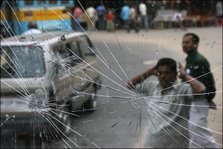
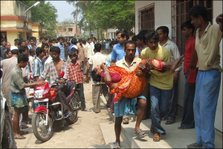
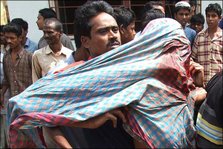
सीपीएम की क्रांति

सीपीएम की क्रांति
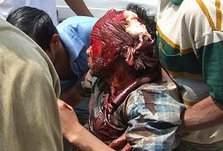
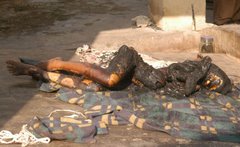
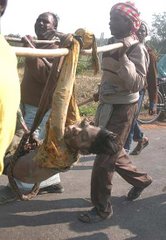
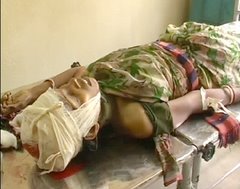
हम एक लोकतंत्र में रह रहे हैं! 14 मार्च को हुई घटना और उसके बाद सीपीएम के बंद के दौरान गायब हुए दो सौ लोगों का अब तक कोई अता-पता नहीं है्. हां। कुछ लाशें हैं जो इलाके में इस हालत में पायी गयी हैं. क्या हम बता सकते हैं कि इन्होंने किस बात की कीमत चुकायी? क्या हम इसको लेकर आश्वस्त रह सकते हं कि हमें भी कभी ऐसी ही कीमत नहीं चुकानी पड़ेगी?
Showing posts with label रिपोर्ट. Show all posts

Monday, November 12, 2007

The No-spin Zone - Nandigram, facts and myths (ongoing commentary)

The No-spin Zone - Nandigram, facts and myths (ongoing commentary)

November 11, 2007 - Are Maoists the new WMDs?

By Debarshi Das, Sanhati

To put things back into perspective, and to abstract from the histrionics of Mamata Banerjee, why did the Communist Party of India (Marxist) send its ground troops to Nandigram? Aided by a paralysed, obliging, administration? And Police looking the other way (even getting wounded in the process by CPM bullets!?

Let’s see what the Politbureau says. In a statement titled Nandigram: Check Maoist Violence it proclaims, “..they [BUPC] have ganged up with the Maoists who have brought in armed squads from outside West Bengal. For the past few months the administration and the police have been out of the area which has been utilised by the armed elements led by the Maoists to entrench themselves. Bunkers have been built and landmines laid. One of the squads is led by Ranjit Pal who was involved in the killing of JMM MP, Sunil Mahato in Jharkhand. The Maoists’ role has been exposed by the landmine blasts which took place on November 6. Of the five landmines that were planted, three exploded, killing two persons… ”.

Pretty impressive details of the enemy one must admit. But do the Police and the administration know all this? 7th November (the day after the said blast) Anandabazar Patrika reports, “..a part of the CPM claims two of their supporters have been killed by the mines laid by the Maoists who are members of the Resistance Committee [BUPC]. There was no satisfactory answer, however, as to how the Maoists could lay mines in the Mansingber area, beside the Bhangabera bridge in the CPM stronghold of Khejuri, evading the strong Police vigil. The district Police super says, ‘Two people have died in the explosion. Whether this is due to bombs or mines is not possible to assert at this moment.’ On land mines the state home secretary states, ‘Cannot be ascertained at present. We are investigating.’ Are the Maoists behind the blasts? Prasadbabu [the secretary] is of the opinion, so far it’s not clear. But he comments, ‘If it is a handiwork of the Maoists then it’s a matter of concern.’” (our translation)

Is the Politbureau in possession of information which is not available even to the Police? Or is it simply indulging in blatant lies? Has W. Bush become its partner in the hunt for WMD?

Friday, April 6, 2007

More Horror Stories From Nandigram

More Horror Stories From Nandigram


CPI(ML) Team In Nandigram: Summary Of Findings


(A 20-member CPI(ML) team comprising Party General Secretary Dipankar Bhattacharya, West Bengal State Secretary Kartick Pal, senior state leaders Dr. Partha Ghosh, Shankar Mitra, Meena Pal and Chaitali Sen, AISA leader Malay Tewari and editor of the Party's Bengali weekly organ Deshabrati Animesh Chakraborty visited the carnage-ravaged areas and people of Nandigram on 17 March. They also talked to injured victims undergoing medical treatment at the district hospital at Tamluk and the extremely under-equipped and over-crowded health centre at Nandigram. They heard reports of most horrendous killings of unarmed people, gangrapes and brutal assaults on women and children, met several people who were desperately looking for missing family members and were shocked to see very few young girls and children among the survivors in the carnage-ravaged villages of Bhangabeda, Sonachura and Gokulnagar. What follows is a brief report of the team's findings).

What really happened at Nandigram on March 14

From the accounts of the injured at the hospital as well as injured residents of the three affected villages – Sonachura, Bhangabera and Gokulnagar, the following facts emerge about the events of March 14.

The villagers were apprehensive of a police crackdown. They wished to be sure not to give the police any pretext to attack. Therefore, feeling that the police would surely not attack defenceless women and children, the latter assembled in the form of separate and adjacent prayer meetings of Hindus and Muslims in the maidan between Gokulnagar and Bhangabera. A huge 5000-strong police force stormed into the area, and began by kicking at the worshippers and destroying their idols and prayer area.

The police then lobbed teargas shells and fired rubber bullets – not to disperse a violent or unruly mob, but rather to literally create a smokescreen and confuse the crowd of people. Having done so, the firing began. The bullet wounds on the bodies of the people at hospitals are mostly in the waist, chest, back – bullets were cold-bloodedly aimed to kill. Local CPI(M) leaders oversaw the entire operation, and many villagers recounted how several of those in police uniform and helmets wore chappals on their feet, indicating that they were actually CPI(M) goons in uniform.

A particularly brutal feature of the attack is the aspect of sexual assault on women and massacre of children. Women have recounted having seen little children being torn apart. They said many children were still in school uniform, having just returned from morning schools, and were brutally assaulted. A large number of children are still missing; it is not clear whether they have run away, been abducted, or been killed and the bodies disposed off. The local people suspect that the missing children have been killed.

The people informed us that the horror did not end on March 14. Our team visited on March 17, and we were told that on 15th, 16th, and right up to the morning of the 17th, the assaults by CPI(M) goons continued.

Evidence from the Hospitals

The team felt the accounts gathered from the injured in hospitals were the most authentic, since those people had beyond doubt been at the spot and had directly witnessed the episode. We saw a broken ambulance lying in a pond. TV footage showed police beating up a woman who was trying to pick up a severely injured and unconscious person. It appears that systematic efforts were made to prevent the injured from getting help.

Members of the team visited Nandigram Health Centre (the nearest health centre), Tamluk Hospital, and SSKM Hospital, Kolkata.

Tamluk

At Tamluk Hospital, we spoke to Sankha Gole (47), Laxmikanta Gayen (26), Niranjan Das (38), Subhransu Partra (30), Gopal Das (32), Anjali Das, Nirmal Mondal (28) and others. Some of the patients had been shifted from here to Kolkata, but there were still others who had been referred to Kolkata and were yet to be taken there for treatment.


We spoke to the CMO at Tamluk hospital, who along with the other doctors and nurses seemed to be doing their utmost, but the sheer lack of medical facilities for the severely injured made their task difficult.

Nandigram

At Nandigram Health Centre, we spoke to Gobinda Paik (37) from Sonachura, Sreehari Samanta (26) from Kalicharanpur, Pranati Maity (50) from Keshabpur, and Ranadhir Galu (40) from Soudkhali. This Health Centre has paltry facilities, and just 30 beds, while even on the 17th, there were at least double the number of patients, with most lying on the ground.

SSKM Hospital Here we spoke to Swarnai Das (40) from Gokulnagar, Avijit Giri (22) from Kalicharanpur, Swapan Giri (21) from Sonachura No. 10, Parijit Maity (51) from Kalicharanpur, Haimanti Halder (50), Tapasi Das, Salil Das, Andhirani, Prithish Das, Banasri Acharya, and others.

We learnt that at Tamluk, 14 dead bodies were brought in on 16th March (12 male, 2 female). Another person died in hospital. Among the injured brought to hospital, 31 were male, and 14 female. 7 dead bodies are yet to be identified. At the Nandigran hospital, 65 injured were brought in, (32 male and 33 female). Both these hospitals are understaffed, there is no sweeper, only two ambulances. Life saving drugs not available and are locally purchased on an ad-hoc basis. The injuries of those in hospital and the reports of the state of the dead bodies tell their own tale. Many had bullet injuries – above the waist, in the chest, abdomen, frontal side of shoulder. In Tamluk hospital there were 2 rape victims – Gouri Pradhan (25), of Adhikary Para of Gokulnagar and Kajal Majhi (35), mother of 4 children, of Kalicharanpur. One of the latter's breasts had been lacerated by a chopper/sword. Swarnamai, in Woodburn ward in SSKM, had severe bullet injuries, while Haimanti had a buttock chopped off and was in the ITU. Such injuries were not merely the result of having been unluckily in the line of police firing – they were deliberate and savage assaults of a sexual nature.

The women we spoke to alleged that 6 other rape victims were not thoroughly examined due to pressure from above. Also that the uterus of one woman was ruptured by introducing a hard metallic rod.

The injured people we met did not speak of themselves – their injuries or chances of survival or lack of proper treatment; they all spoke of how they looked forward to continuing their struggle against eviction from the land.

Calculated Savagery

The sheer savagery of the violence at Nandigram indicate that it was not just another case of unprovoked police firing, or of a police force gone berserk. The injuries inflicted on people (indicated by the state of the dead bodies as well as the survivors) are not mere bullet injuries. We have described above some of the chopper injuries on those in hospitals. A television cameraperson who had seen the mutilated and brutalised dead bodies in the morgue, said he had seen bodies of victims in bad rail accidents and fires – but had never seen bodies in such a disfigured, disemboweled condition as in Nandigram.

CPI(M)'s Complicity

The people at the hospitals as well as in the three affected villages told us they recognised CPI(M) leaders who directed the entire operation –Lakshman Seth, MP and chairman of the Haldia Development Corporation, CPI(M) district leaders and panchayat functionaries like Ashok Guria, Ashok Bera, Debal Das, and Sureshwar Khatua. These leaders also ensured that almost no media reached Nandigram – several newspapers reported how their reporters and camera persons were roughed up by the CPI(M) goons.

CBI's findings as reported in several newspapers, also seem to corroborate the allegations of the villagers and eyewitnesses. The CBI team followed a trail of blood, which suggested that a bleeding body had been dragged some distance to the Ma Janani brick kiln in Khejuri, a CPI(M) stronghold. There the CBI sleuths came across CPI(M) and DYFI literature, party flags and clothes including women's underclothes.

The CPI(M) goons arrested by CBI in this brick kiln include Naru Maity, Rajkumar Jana, Manoranjan Maity, Ratikanta Maity, Sachin Pramanik, Abhishek Ghorui, Kanai Das, Panchanan Sasmal. Villagers allege that they were hired by Laxman Seth and others, for two lakh rupees each for Operation Nandigram. A huge cache of arms and ammunitions were recovered from them, and also CPI(M) leaflets and flags, mobile sets with phone numbers of local CPI(M) leaders were also recovered from them by the CBI.

The myth of extremist 'outsiders'

The CPI(M)'s official response has been to blame 'outsiders', 'naxals' and the like for indulging in 'lawlessness', and even attacking the police with bombs and pipe guns – thus justifying the need for the police action. What truth is there in these accusations and claims? A simple question which needs to be posed against these claims is: how come no police personnel is seriously injured, if they were actually subjected to an extremist assault by a huge mob? CPI(M) MP Sitaram Yechury has said that SEZs and land acquisition had nothing to do with the occurrence at Nandigram; 'outsiders' and 'extremists', frustrated by their inability to mobilise local support, indulged in violence against the police. Our observation was quite the contrary. Nandigram is a traditional CPI-CPI(M) stronghold, an old area of Tebhaga peasant struggle. The local MP is from CPI(M), MLA from CPI, and most panchayat members are from CPI(M). The only reason why this very mass base suddenly turnedagainst CPI(M) was the proposed land acquisition for the proposed SEZ to built up by Indonesian MNC Salem International.

It was precisely because Nandigram was emerging as a model for anti-SEZ, anti-corporate- land grab resistance that it invited such horrible repression. It had become a sore spot and a source of concern and anxiety, not just for local CPI(M) leaders or the LF Government, but for all Governments all over the country.

The Build-up to March 14

March 14 has not happened all of a sudden – it is not a mistake that the LF Government or the CPI(M) has committed on the spur of the moment. The events of January in Nandigram were a dress rehearsal for March – in which the patterns for the March assault can be discerned. In January, the police withdrew in the name of allowing 'peace' to be restored; while actually they were clearing the way for a planned assault by CPI(M) cadres from Khejuri. Then, there were systematic attempts to stop facts from reaching the public: the CPI(ML) fact-finding team was arrested before they could enter Nandigram, jailed and had charges of murder and illegal possession of arms slapped on them.

Then, the CM appeared to backtrack in the face of the determined resistance, and claimed the HDA notification of land acquisition was a 'mistake' that caused 'confusion'. He made reassurances that no land would be acquired without farmers' consent. But it seems that these statements were only meant to deliberately mislead the movement and people at large, even as 'Operation Nandigram' was being planned all the while.

Since January, the statements of senior CPI(M) leaders all clearly indicate the ominous threats to the people of Nandigram, and reading them after March 14, they sound like chilling prophecy. CPI(M) CC Member Benoy Konar said "We'll surround them and make life hell for them". Health Minister Suryakant Mishra who is from East Midnapore, had declared "Snakes come out in the summer, you must use the flag like a stick and smash their heads" (see Ananda Bazaar Patrika, 31 January). And in the Kisan Rally of 11 March at Brigade Parade Ground, Buddhadeb also issued a veiled threat that no region would be allowed to hold the development of the State to ransom. These statements are as clear an incitement to and indication of violence as one can get.

Post-Carnage Justifications

After March 14, Buddhadeb has made three types of statements. Immediately after the incident, he declared to the CPI State Secretary that he was "under pressure from the party to act". On the 14th he arrived too late in the Assembly to make a statement. On the 15th, in the Assembly, he justified the police action as "self-defence". And eventually, he accepted moral responsibility as head of the Government, and said he had not expected so much resistance and not known the police excesses would be quite so much.

What to make of the behaviour of the LF Government and CPI(M) in the aftermath of March 14?


The LF partners have reduced the whole issue to a matter of internal democracy of the Left Front – and have ignored the fact that what took place at Nandigram is a massacre, genocide, murder of democracy. Let us repeat that March 14 was no blunder that happened on the spur of the moment. In January itself, intellectuals and well-wishers of the LF Government and of the CPI(M) had expressed concern about the escalating violence in Nandigram and warned the Government to desist from the policy of forced land acquisition and SEZs. The CPI(M) arrogantly dismissed these voices and did not bother to listen to even the pro-Left intelligentsia, preferring instead to mock at them.

If Buddhadeb says he acted "under pressure from the party", the statements of the topmost CPI(M) leadership indicate that all levels of the CPI(M) hierarchy have been equally complicit in chalking out the blueprint of Operation Nandigram.

Long Live the People's Resistance against Aggression

Long Live the People's Resistance against Aggression of
Globalization! Long Live the People's Occupation of
Nandigram!

Download this full report in PDF

[ As observed by Jiten Nandi, Shamik Sarkar, Md. Helaluddin, Subhapratim
Roychowdhury, Anupam Das Adhikari and Amita Nandi on behalf of Manthan Samayiki,
a bi-monthly Bengali little magazine from Kolkata, West Bengal.]
We, associated with a Bengali bi-monthly little magazine, 'Manthan Samayiki', went
Nandigram three times during January to March. Being the residents of Metiabruj in
Kolkata, we are neighbored by the people involved in garment industry, a communitybased
industry of muslim bengalees. Thousands of male villagers (about seventy-five
thousand, according to Morsalin Molla, MLA, Mahestala, South 24 Parganas) from
Nandigram block stay in Metiabruz and around temporarily for working in the
community garment industry. We went Nandigram each time along with these people.
We visited there on 18th January, 17-18 March and 27-29 March 2007. We travelled
within Nandigram by bicycles and van-rickshaw.
Nandigram is almost 160 km away from Kolkata. There are three blocks,
Nandigram I, II, and III in the district of East Medinipore. Nandigram I block is mostly
dominated by muslims and lower caste hindus. People survive by cultivation, fishing, and
engaging themselves in garment industry. Haldia township and industrial belt, being just
opposite to the Haldi river, promised them a huge opportunity of getting employment in
modern industries. But in reality, most of the workers who got jobs there, were driven off
once the construction works were finished. They realized that, in modern industries only
highly educated elites could manage a respectful job. Village people are going to get
nothing from there. Still now, some villagers go Haldia, for purely temporary contractual
jobs with miserably low salary. We heard about the Jellingham Project at Nandigram
Block 1, where about 400 acres of land had been acquired in 1977 for ship repairs. One
hundred and forty two families lost their land. The Project stopped functioning after five
years and the site today lies deserted.
Nandigram fought British colonial rule gloriously, almost occupied itself from British
Raj in 1942. It took part in the tebhaga movement afterwards, under the leadership of
legendary Communist Bhupal Panda. The indomitable spirit of the community ( the
chashi-samaj ) Nandigram was carried positively by the leadership of Communist Party
of India in tebhaga movement. Time and again, Nandigram village-folks dug trenches on
roads to fight the aliens. In 1982, a movement under the leadership of Bhupal Panda
originated in Nandigram with the demand for development (roads, sanitation, water
supply, electrification, etc.). Police fired on the agitation and killed a student, Sudipta
Tewari. Again, village-folks dug trenches in Nandigram to prevent police from entering
into the villages.
Before 29th December 2006
A rumour was there in Nandigram for more than a year that some of the mouzas or
villages and cultivation land might be acquired by the State Government for instituting an
industrial zone, Special Economic Zone (SEZ). A land acquisition row was already there
nearby for increasing the area of Kulpi port which would take lands from coastal area
belonging to mostly fisherfolks and farmers. A committee, dubbed as Krishak Uchchhed
Birodhi O Jonoswartho Roksha Committee (Committee Against Eviction Of Peasants
And To Save People's Interest) was formed during August 2006 by Socialist Unity Centre
of India (SUCI) along with Indian National Congress for propaganda work against forced
land acquisition. Another committee started to function in Nandigram and adjacent
Khejuri block, called Krisi Jami Raksha Committee (KJRC) (Committee To Save
Farmland). It is a state-wide initiative led by main parliamentary opposition party, called
Trinamul Congress, formed in the pretext of land acquisition row in Singur of district
Hooghly for a Tata Motor's manufacturing unit. Another initiative, called Gana Unnoyon
O Jana Odhikar Sangram Samity (GUJOSS) (Association For The Struggle Of Mass
Development And People's Right), comprised of Jamait I Ulema Hind and Communist
Party of India (Marxist-Leninist) (Santosh Rana faction), established in Bhangar of
district South 24 Parganas in the last quarter of 2006 to fight forcible eviction of peasants
there for setting up of an industrial zone, started working in Nandigram during November
2006. Meanwhile, State Government occupied and fenced ( kanta-bera ) Singur land
imposing section 144 of penal code of India despite protest and refusal to take
compensation for land from a large section of villagers. And Ministers and ruling
Communist Party of India (Marxist) leaders started talking publicly of setting up a huge
chemical hub in Nandigram under the Selim group of Indonesia. GUJOSS started setting
up some village committees comprising villagers cutting across the boundary of party
affiliation after conducting a survey in some villages in Nandigram which showed that
almost 99 percent villagers were ready to 'give their lives before leaving their
motherland'.
29th December 2006 to 3rd January 2007
A public meeting was held on behalf of ruling CPI(M) in Nandigram market on 29th
December 2006 where MP from Tamluk and East Medinipore district leader Lakshman
Seth urged farmers to pave the way of development and industrialization in Nandigram
by giving up their lands, both farmland and residential land, against compensation. He
also urged people to take the opposition at gunpoint, alleged the villagers. He gave a list
of the names of the villages ( mouzas ) those would be taken for the proposed chemical
hub, on behalf of Haldia Development Authority of which he is the chairperson. Later
that document was found in District Land
Reforms Office. Male-folk returned to their
villages hearing the news. A large number of
male-folks, predominantly muslims, who
worked in Metiabruz or elsewhere came to
their villages for Idujjoha on 1st January
2007. They also became agitated hearing the
news that their birth-place ( matribhumi ) is
going to be forcibly occupied by the
government. On 3rd January 2007 a
Governmental car entered into Nandigram
and went to Kalicharanpur gram panchayet
office. People gathered and fearing forcible
land acquisition drive, rushed towards that
panchayet office. Panchayet Prodhan Samiran Bibi and her husband CPI(M) leader
Rejjak told them that a UNICEF team had arrived here for a government project for
Nirmal Gram Prokolpo or Fresh Village Project. People marched back, but in their way
to Garchakraberia, they found some four police vans with armed police force arrived
there in Osmanchawk. The procession asked the police why they came. Police replied
with lathicharge and gunfire which left 4 persons wounded. People got furious and
chased the police van. One police van had been torched in Garchakraberia Bhuta More.
All the police personnel left rapidly. Traditionally the peasant community of Nandigram
is hostile to police administration. In 1902, villagers burnt a Daroga, called Raimohan in
Gumgarh village of Nandigram who was backing a mahajon (money lender) called
Gopal, and attacked Nandigram police station. Several villagers were hanged later for
that offence by the British rulers. This memory is still alive among villagers through
folklores and songs. One such song goes like "Ki khela khelili Gopal Nandigramer
bajare/ Khelar tape Gumgarh kanpe/ Raimon daroga pure more/ kharer gadar bhetore.
(Gopal, what a trick you played in Nandigram market./ The trick trembled Gumgarh,/
leading Raimohan daroga to be burnt in a heap of paddy-grass). Till the day, i.e. 3rd
January the agitation was mostly dominated by male-folk of the villages. After this
incident women-folk from both communities, Hindu and Muslim came out of their
homes. Within an hour (in the afternoon) all the village populace started digging the
roads in their villages for preventing police to enter into the villages. Within 12 hours,
people dug more than hundred places, cut small concrete bridges, blocked the roads with
tree-trunks, huge trees, boulders and bricks all through the villages proposed for
acquisition for the chemical hub SEZ. People occupied their own villages. It was a huge
show of people's power and uprising. Sumit Sinha, a member of CPI(ML) (Santosh Rana
faction) was present there at that time. He described the event like one when 'people's
knowledge and initiative surpass leaders' episteme and craft'. He said that he was
reluctant to believe the incidence in North Bengal when over 100 km rail-track was
Torched police van (on 3rd January) carrying a poster,
we will not leave motherland for industry
eliminated within a night by people during Khadya Andolan in 1950s. Now, seeing this
mass initiative he started believing the actuality of that incidence.
Upto 7th January 2007
From 4th January 2007 people urged for unification of three above-stated committees. On
5th January 2007 a meeting was held in Etimkhana (muslim orphan house) in Tarachand
Bar beside Nandigram market
involving all block or district level
leaders of political parties who were
involved in those three committees. A
unified committee, called Bhumi
Uchchhed Protirodh Committee
(BUPC) (Committee for Resistance to
Eviction from Homeland) was
established from the meeting and
resolution was taken that nobody would
hoist their own political flags within
Nandigram excluding the case when a
political party was organizing a meeting or march on
its own. On 6th January noon, a huge public meeting
was held in Bhuta More, Garchakraberia announcing the formation of BUPC.
Meanwhile, the agitation led by KJRC in Khejuri was brutally suppressed by State
administration and CPI(M) cadres there and all the agitating villagers were made silent or
'proponent of industrialization' at gunpoint. Nandigram and Khejuri are separated by a
50ft wide canal called Talpatti Khal. A bridge separates two newly made (2004-2005,
under Pradhan Mantri Gram Sadak Jojona or Prime Minister Village Road Project)
pakka roads or pitched roads, Nandigram's one connects Talpatti Khal to Basulichawk
(16.2 kms.) and Khejuri's one connects Talpatti Khal to Rasulpur. Historically,
Nandigram was attacked time and again by Portuguese armada (Harmad in colloquial
tongue) or Pirates and British invaders through Khejuri. Nandigram people used to resist
them. Nandigram was again attacked on the onset of 7th January 2007, from Khejuri, with
bombs and bullets. It was a foggy morning. Thousands of people from the adjacent
villages (Bhangabera, Sonachura, Gangra, Adhikaripara, Gokulnagar, Tekhali etc) started
thronging at Talpatti Khal bridge, to resist the invaders, the 'army of industrialization', the
'harmad bahini', the 'cadres of Lakshman Seth', carrying sticks, Da (bamboo cutting
knife), Banti (knife used for domestic vegetables cutting). Three persons died of bullets
during resistance, namely, Bharat Mandal, Sekh Selim and Biswajit Maiti (12 year old).
A landlord of Bhangabera, Shankar Samanta (His two storied fort-like residence, gardens
and ponds constitute at least 20 acres of land, leaving aside the farmland he owned.
Almost all of the other houses in Bhangabera are made of mud. This family was
traditionally with Indian National Congress, also his father Sudhangsu Samanta, but
turned into CPI(M) two decades ago) was allegedly showing the invaders the key persons
of the resistance for killing them, villagers alleged to us. People chased him, captured and
burnt alive. His mansion was ransacked and torched also. Invaders stopped shooting after
the sunset. Thousands of people decided to dig the pakka road to cut the link between
Barricades with tree-trunks and boulders
Talpatti Bridge and Nandigram. The 16.2 km long pitched road was ornamented with
several ditches, trenches, tree-trunks, boulders, bricks. The war began.
7th January to 14th March 2007
As the war situation unfolded, formation of village committees, the organization from
below, virtually stopped. Instead political leaders of BUPC started leading the whole
resistance. People already started night-vigil to resist the invaders. When they found any
intrusion in night, they started
chanting Shankha from
households and making call of
alert ( ajan ) from mosques.
Hearing this everybody used to
come out of their households
and marched towards the
Talpatti Khal, which was
started to be termed as border,
colloquially. In a war like
situation, people couldn't resist
the sophistically armed police and cadre
force without weapons. And so weapons
including guns started to come in the hands
of villagers through some heavyweight political leaders of parliamentary opposition.
Villagers reorganized the barricades and trenches on roads in a manner so that one
could move by walking, bicycle or even Ricksaw, but no car or speedy motorbykes could
move in or out. The ferry service connecting Nandigram and Haldia through Haldi River
was cut out by ruling CPI(M) cadres temporarily, Haldia town being a stronghold of
them. The supply of cash crop and labour from Nandigram to Haldia was halted. Haldia
market faced a huge price rise. Fearing unrest in Haldia, ferry service resumed after seven
days. But labourers from Nandigram were systematically manhandled in Haldia by
CPI(M) cadres. Especially Muslims were targeted. It is very special. CPI(M) is known
internationally as the strongest
critique of Gujarat communal
riot and Hindu fundamentalism.
Cadres belonging to that party in
Haldia, started provoking
muslim sentiment by targeting
them specifically. The
Nandigram-Metiabruz buses
were systematically searched by
CPI(M) cadres in Nandakumar,
some 40 km away from
Nandigram, and people
belonging to those villages
proposed for chemical hub SEZ
A trench on Prime Minister Village Road Project road, with
a black flag of BUPC
were got down from buses and were advised to go by walking as 'they were opposing
industrialization, they should not be allowed to go by buses'. These things were done by
CPI(M) cadres after a state level leader of CPI(M), Benoy Konar called for 'making the
villagers' lives a hell encircling them from three directions' before media. The three
directions were Nandakumar, Khejuri and Haldia. Meanwhile Chief Minister Buddhadeb
Bhattacharya said before media that the proposed chemical hub would not be set up at
Nandigram, if villagers didn't want it there. He also announced to tear apart the Haldia
Development Authority's notice, before media. But Lakshman Seth, the Tamluk MP and
Haldia's strongman, urged for setting up the SEZ in Nandigram. Nirupam Sen, state
industry minister, also said in that
way. No official notification was
issued any further.
The everyday life of
village-folks hampered in a big
way. Cultivation, schools and
food supply and external
communications were hampered.
People overcame those, just by
solidarity within community.
People even ate raw khesari
leaves and cereals during these two and a half months. Help came
in the form of rices and cereals from adjacent villages. Village
life, in a contrast to the city dwellings, can live on its own resources, crops from fields,
fishes from ponds, quoak doctors etc. People survived by the virtue of their own
resources, despite the barricades and trenches they organized to occupy their own
villages. No festivals or ceremonies had been held in those villages during this period, be
it marriage ceremony, or tajia of Muharram. A handful of strong CPI(M) followers from
those villages left voluntarily fearing atrocities, or been driven away in some cases. The
total number wouldn't cross 120, the villagers urged. All the rest of CPI(M) followers
took up the call of resistance to save their home land and livelihood. Some of them led
the resistance also. The martyr, Bharat Mandal was one of them. These villages were
dominated by CPI-CPI(M) followers traditionally. All the villages became united
showing huge communal amity. BUPC remained the only organization left there.
On the eve of 14th March 2007
After a state wide, two-month long campaign for industrialization, CPI(M) organized a
big mass meeting in Kolkata on 11th March under the banner of Krishak Sabha, the
party's peasant wing. The home secretary of the State Government, Prasad Ranjan Roy
ordered the administration to RE-OCCUPY the Nandigram villages on 14th March 2007.
BUPC organized a mass deputation at Nandigram police station on 13th March. The mass
deputation was thronged by women-folks in thousands. After a meeting in state assembly
between East Midnapore district leader of Trinamul Congress, MLA Subhendu Adhikari
and Chief Minister Buddhadev Bhattacharya, Subhendu assured the BUPC leadership
that police would come on 14th March to repair the trenched and barricaded roads only.
A trench by Talpatti bridge
Police would use tear gas or fire blank from guns at most, BUPC leadership perceived.
They urged the villagers to organize a peaceful demonstration of at least 10 thousand by
the side of the Talpatti bridge and send back all their weapons. In a way, one can say that
BUPC leadership disarmed the village-folks on 12th and 13th March, who were indulged
in a war with the invaders for saving their homeland and saving themselves from
eviction. Villagers followed BUPC leaders' advices.
On 14th March 2007
The villages by the Talpatti canal were mostly populated by hindu community. And the
heart of the resistance was Garchakraberia, a muslim dominated village, which is 10 km
away from the Talpatti Khal. The shankhadhwani by hindu women-folk started as early
as at 3 am on 14th March. Children and women gathered beside the Talpatti bridge at 3
am and started puja of Gouranga idol and Singhabahini, the community believes that the
goddess save their land and lives. Muslim women and children came a little late, at 4 am
and started reading from Koran Sharif. Thousands of villagers, mostly children and
women were present there by the dawn. No prominent leaders of BUPC were available at
the spot, but local village level leaders were there.
Police started the operation on 10 am. They fired tear gas and within some
minutes began firing. Armed CPI(M) cadres came along with the police. The cadres wore
police uniform for camouflage. State reoccupied Sonachura, Bhangabera, Adhikaripara,
Tekhali (3 km from the Talpatti bridge) with police, special combat force, sophisticated
weapons, and CPI(M) cadres. Within one hour wounded persons started to come to illprepared
Nandigram Hospital. By the evening, 60 people came with injuries, mostly with
bullet injuries in upper parts of the body. So the firing was intended to KILL the
protestors, not to disperse them. 14 deaths have been reported immediately by
government. Party flag entered into those villages of Nandigram after two and a half
months. The victory of state over the villagers was celebrated there, and the rest part of
the East Medinipore district by hoisting innumerable brand-new hammer-and-sickle
marked red flags. Meanwhile, a district wide 12 hour strike was issued at the afternoon of
14th March by CPI(M) trade union wing CITU, to prevent the miscreants from hampering
the process of reinstallation of administration in Nandigram, according to 'The Hindu', a
media source. Everywhere in the district, CPI(M) cadres took the streets with flags,
blocked roads, and prevented the parliamentary opposition leaders, the Governor and the
media from entering into Nandigram. The ambulances carrying seriously wounded to
Tamluk hospitals were also attacked. Reports of huge death and disappearance of body,
rape started coming from Nandigram. Sonachura, Bhangabera, Adhikaripara, Tekhali
were completely under the control of police and armed CPI(M) cadres by the night of 14th
of March.
After 14th March 2007
Under the direction of Kolkata High Court, CBI team arrived at Nandigram on 15th
March. Police and cadres in Sonachura village organized the villagers there at gunpoint
for leading a procession for re-occupation of Garchakraberia on 16th March. But their
attempt failed, as almost 50
thousand villagers from other
villages, led by BUPC, came to
sonachura on 16th March morning.
Cadres escaped the villages. Police
forces presented their begged for
lives. Red flags had been replaced
with a handful of black ones of
BUPC, and predominantly with tricoloured
Trinamul Congress flags.
After the red ones, entered the tri-coloured party flags. After severe protests in and
outside of West Bengal and condemnation of state sponsored mass killing of unarmed
villagers, facing opposition from ruling coalition partners of decades, Left Front
Government decided to withdraw the police force from Nandigram systematically, issued
a notice on behalf of East Medinipore district magistrate stating that no land acquisition
would be held in Nandigram. It was the second official notice related to Nandigram SEZ.
First one was issued on behalf of Haldia Development Authority at the end of December
2006 providing the list of mouzas to be acquired in Nandigram, as stated above.
The struggle of Nandigram is still continuing. Now the land grab fear is over. But
the anguish and grief of losing a number of their comrades remains. Villagers are asking
for the punishment of the murderers and rapists. We asked the female-folk about what
kind of help they needed. They urged us to join the struggles 'like them'. The CPI(M)
party cadres are still bursting bombs at night, from the side of Khejuri. BUPC asked most
of the 'driven out' or 'left out' of the villages for their CPI(M) affiliation to come back, but
urged for the arrests of a few of them who were involved in the violent attack and
massacre on 14th March.
The residents of 38 villages, mostly a peasant population, predominantly
poor and marginal, in Nandigram fought a severely uneven fight for last 3 months.
It was a genuine people's resistance against globalization in its present aggresive
form. Global capital is installing SEZs, neo-colonies in India. Almost 200 SEZs are
already working in our country. Gujarat, Haryana, Orissa, Maharashtra, Uttar
Pradesh, Jharkhand etc are prominent states in SEZ maps of India. All state
governments, be it Congress led or BJP led or else, are asking for SEZ and
advocating it for industrialization and development. The SEZ Act was planned
during BJP led NDA government, and implemented in 2005 by Congress led UPA
government. It was passed by parliament without even any debate. The countrywide
people's resistance sent the act under review and sanction of fresh SEZs was
stopped, in January, immediately after the people's uprise and occupation in
Nandigram. Village-folks are resisting the land grab and forced eviction almost
everywhere, at Kalinganagar-Jagatsinghapur in Orissa, at Raigarh in Maharashtra,
in Jharkhand, in Uttarpradesh etc. Nandigram was one among them. And it
emerged VICTORIOUS. Chemical hub SEZ in Nandigram died before its birth. It's
a successful local resistance, a people's resistance against globalization with a
broader and immediate implication.
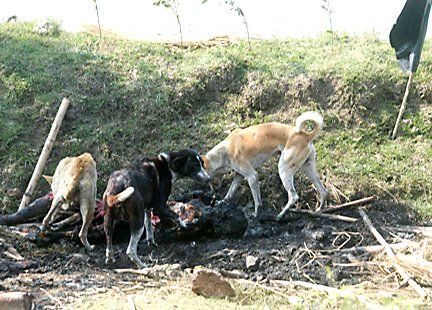
Medical Team Report from Nandigram with names, locations, and injuries - April 5

Medical Team Report from Nandigram with names, locations, and injuries - April 5

REPORT OF THE MEDICAL TEAM ON NANDIGRAM INCIDENT OF 14.03.2007

After the incident of firing by the police at Nandigram on 14.3.2007, report of large-scale injuries and ailments arising out of and as a consequence of the said incident had reached the media. Some doctors and health workers decided to visit the affected area to render the very urgent medical help to the people affected by the incident.

A team of doctors (Medical Service Centre, Kolkata) visited several affected areas of Nandigram on 17.3.2007 and came out with a report, which was reported in the press.

OUR FIRST VISIT (18.03.2007)

On 18.3.2007, a team comprising of six physicians (including 2 female physicians), three junior doctors, sisters, medical students and health-workers, organised by public-spirited organizations working on health, i.e., SRAMAJIBI SWASTHA UDYOG, PEOPLES’ HEALTH and JANASWASTHA SWADIKAR MANCHA, visited some of the affected areas of Nandigram to render medical help to the affected people.

The Medical Team found that more severely injured patients had mostly been taken to the hospital and persons who were critically injured had been transferred to Tomluk Hospital (District Hospital) and SSKM Hospital / RGKar MCH of Kolkata. But they found that a very large population, predominantly women, were suffering from blunt trauma injuries, very often multiple, and had not received any medical help. The same is true also for a very large number of people, suffering from eye-problems ( headache, watering, photophobia, burning sensation, dimness of vision etc.) even 4 days after the tear-gas exposure on 14.3.2007. People were also suffering from mental trauma, though unfortunately the medical team did not have a psychiatrist or a psychologist who could have professionally assessed the actual extent of the trauma. The medical team treated 129 patients and had the opportunity to talk to about 300 victims, who described the unprovoked and brutal attack on unarmed assembly of villagers, including a large number of women and children, which continued even after people had dispersed and was trying to flee from the scene. The women also described with horrid details of sexual assaults on them. Attackers, they said, included a large number of persons in police uniform but with chappals on.

The Medical Team had also found that many could not return to their home and resume their normal activities. Camps were organized by the local people to provide food for these affected people. These camps were found to be suffering from an acute shortage of provisions required to run the kitchen (the medical team bought a day’s provision to one camp).

2ND VISIT (21.03.2007)

The next visit took place on 21.3.2007. It was a general relief cum medical relief team, consisting of two physicians and four health workers. There was plan for documenting the trauma of the victims, though due to shortage of time, addition burden of general relief work, the number of patients treated and documented was limited to only 30 in three different places. General relief and provisions worth Rs 15, 790 were provided to four different relief camps in the affected areas.

3RD VISIT (24-24 March, 2007)

The third visit was on 24-25th March, 2007. From the experience of two previous visits by the medical team, it was decided that the team should stay overnight in the affected area to render more intensive and extensive medical assistance, and that it would concentrate on medical relief only.
This time the team comprised of eight doctors, including two female doctors and one orthopaedic surgeon, one sister and seven health workers. They organized 4 medical camps, in Southkhali (24.3.2007), Sonachura High School (25.3.2007), Kalicharanpur Primary School ( 25.3.2007) and
Dakshin Jalpai, Bhangabera (25.3.2007). It may be mentioned here that one eye relief camp was organized concurrently in Sonachura High School on 25.3.2007 by ARGUS COMMUNITY EYE SERVICES.

A brief description of various types of patients seen on 24/25.3.2007 is as follows:

Camps: Soudkhali, Kalicharanpur, Dakshin Jalpai, Sonachura

Date: 24.3.2007 and 25.3.2007

Total cases seen: 261
Cases directly related to the incident of 14.3.2007 230
Male 83 (36%)
Female 147 (64%)
Child 9 (4%)
Hindu (mostly SC) 222
Muslim 8

Eye problems 135 (58.6%)
Direct hit by the police 54 (23.4%)
Other musculo-skeletal injury 41 (17.8%)
Multiple Injury 27 (11.7%)
Bullet Injury 4
Ear injury 2 (children)
Fracture 1
Spinal Injury 1
Mental trauma 28 (12.1%)

· 70% to 80% of the patients of all camps had eye problems since 14.3.2007, but in Sonachura camp these patients attended cocurrently running eye camp, hence the average shows a lower figure
· The details of different camps has been shown in Annexure I.
· The doctors in the team (except those at Sonachura camp) had no training in properly assessing post traumatic stress, hence this condition may be found to be under reported particularly in the three other camps.

Eye Camp: Sonachura

Date: 25.3.2007
Organised by: ARGUS COMMUNITY EYE SERVICES

Total cases seen: 155
Cases directly related to the incident of 14.3.2007 114
Male 55 (48.2%)
Female 55 (48.2%)
Child 4
Hindu (mostly SC) ALL
Muslim Nil

GENERAL OBSERVATIONS:

1. It was seen from the TV clips that many persons were shot at the chest, abdomen and even in their heads, though when dispersing a mob, the police is to “use as little force and do as little injury to person and property as may be consistent with dispersing the assembly, arresting and detaining such persons”. ( Section 130, CrPc).

2. The medical team also saw other cases of bullet injuries at face level in the village.

3. The number of victims was found to be very large and included a large number of women and children also.

4. The lathi charge was extensive, it was inflicted even on women who had already fled from the place of assembly and was hiding in nearby houses and bushes in and around the place. This lathi charge was severe, producing multiple blunt injuries with bruises which was evident on medical examination even on 4/7/11/12 days after the event. These injuries included fracture, spine injury, chest injury etc. Injury marks were mostly found on the upper part of the boby upwards. It may be mentioned here that when the medical team had reached the scene, the people with major injuries had already been taken to various hospitals.

5. Many people suffered from the musculo-skeletal injuries including fall etc., as they were trying to escape the scene and police was persistently chasing them.

6. Many persons were injured due to beating by the police while they were trying to rescue the injured persons and the children.

7. Many women complained of sexual assault. They were also found to bear injury marks on their breasts, abdomen and private part. However, lack of privacy and other infrastructure prevented the medical team from proper physical examination and even thorough history taking.

8. A very large number of affected people, predominantly women, were found to be suffering from eye problems (burning sensation, watering, phototophobia, headache, dimness of vision etc), persisting even 11 days after exposure to tear gas. So much so that every camp attended to 70-80 percent of patient suffering from eye problems related to tear gas exposure. It may be noted that the people were aware that there may be tear gas attack, they knew that in case of tear gas attack they were to wash the eyes with copious amount of water, and they followed this instruction. Some persons also had injury in eye and other parts of the body from tear gas shell explosion, burn injury from contact of tear gas shell, history of breathlessness from close exposure to tear gas.

9. Thus it appears to the medical team that the gas used against the people may not be the usual tear gas ordinarily used to disperse the mob, but something unusual having more permanent and serious effects. The medical team urges a serious investigation into this matter.

10. It was found that although most of the severely wounded people were transferred to hospitals, a few seriously wounded persons, including a nine year old boy suffering from supracondylar fracture of arm, a spinal injury patient etc., practically received no medical attention. Also, many people, who attended Nandigram Hospital, did not receive medicines due to shortage of required medicine and many patients could not be examined and investigated properly due to lack of infrastructure there. Patients suffering from eye problems received almost no medical treatment. It may be noted here that Nadigram Hospital (BPHC) may be called a glorified primary health center and is not equipped to deal with so many serious injury and other cases. It was learnt that this Hospital did not receive much additional support even after the incident.

11. Many patients were found to be suffering from mental trauma with symptoms of sleeplessness, anorexia, anxiety and fear. Many women saw people, even children being killed, wounded people snatched. They were in fear of repeat of attack, anxiety for the safety of near and dear ones, and particularly about sexual assault of young daughters. But unfortunately the medical team did have trained human resource to properly assess situation, so the number of patients suffering from mental trauma mentioned here would be an understatement of the actual state of affairs. However, a team of psychiatrists, psychologists and other mental health workers has already organized a camp in Sonachura on 31.3.2007. Their reports will be published soon.

12. An interesting observation was that very few patients came to the medical camp for ailments unrelated to the incidence of 14.3.2007 and those who came for injuries etc also mainly reported the injuries only and generally had no other medical complain.

13. The team of doctors also conducted a training camp for local volunteers so that if any untoward incident takes place again, these volunteers would be in a position to render rudimentary patient care (containment of bleeding, removing the patients observing proper protocol, wound dressing and things like that). 22 volunteers from different parts of the area covering almost the entire affected area were trained and 10 emergency kit with a couple of manuals in Bengali language were distributed among them.

14. On the two previous visits the Team attended to 169 patients. Though those two visits were not very well documented, it can be said that the general observation was basically the same.

15. Members of the Team also visited Nandigram Hospital, Tamluk Hospital

(Annexure II) and SSKM Hospital (Annexure III).

Dated 3.4.2007

ANNEXURE –I

Camp: Southkhali

Date: 24.3.2007

Total cases seen: 80
Cases directly related to the incident of 14.3.2007 72
Male 16 (22%)
Female 56 (78%)
Child 1
Hindu (mostly SC) 64
Muslim 8

Eye problems 55 (76.4%)
Direct hit by the police 13 (18%)
Other Musculo-skeletal injury 7
Multiple Injury 10 (13.9%)
Fracture 1
Bleeding P/V since 14.3.2007 1
Injury to private parts (female) 1
Mental Trauma 6 (8.3%)

Camp: Dakshin Jalpai, bhangabera

Date: 25.3.2007

Total cases seen: 54
Cases directly related to the incident of 14.3.2007 46
Male 24 (52.2%)
Female 22 (47.8%)
Child 1
Hindu (mostly SC) ALL
Muslim Nil

Eye problems 33 (71.7%)
Direct hit by the police 8 (17.4%)
Other musculo-skeletal injury 17 (37%)
Multiple Injury 1
Spinal Injury 1
Sexual assault on 14.3.2007 1
Mental Trauma 6 (8.3%)

Camp: Kalicharanpur

Date: 25.3.2007

Total cases seen: 56
Cases directly related to the incident of 14.3.2007 53
Male 8 (15%)
Female 45 (85%)
Hindu (mostly SC) ALL
Muslim Nil

Eye problems 43 (81.7%)
Direct hit by the police 13 (24%)
Other musculo-skeletal injury 7 (13%)
Multiple Injury 4
Bullet Injury 2
Sexual assault on 14.3.2007 3
Mental Trauma 4 (7.5%)

Camp: Sonachura

Date: 25.3.2007

Total cases seen: 82
Cases directly related to the incident of 14.3.2007 59
Male 39 (59.3%)
Female 24 (40.7%)
Child 7 (11.8%)
Hindu (mostly SC) ALL
Muslim Nil

Eye problems 4*
Direct hit by the police 20 (34%)
Other musculo-skeletal injury 10 (17%)
Multiple Injury 12 (20.3%)
Bullet Injury 2
Ear injury 2 (children)
Mental Trauma 12 (20.3%)

· A concurrent eye clinic was running at the same place

ANNEXURE- II

Patients In Tamluk Hospital

Some of the members of the team paid a visit to the Tamluk State Hospital on 1.4.2007, where a large number of injured patients of the said incident
(on 14.3.2007) were admitted. Most of the patients were admitted in this Hospital on or after 16.3.2007; some of them had been referred to by the
Nandigram Hospital, either due to lack of infrastructure, or because of the seriousness of injury. The team talked with the patients, had discussion with the attending physicians. Some of the salient features that the members of the medical team came to know may be summarised as follows:

1. The patients admitted in Tamluk Hospital Hospital had major trauma. They has bullet injury, fracture, multiple fractures, Head Injury, amputation, eye injury, chest injury, breathing problems, history of sexual assault etc. Some are immobilised in POP casing and castings, many had operations, one was on Intravenous drip even 17 days after the incidence.

2. Almost all of those who had been admitted to this Hospital (Tamluk State Hospital) on or after 16.3.2007, complained of various degrees of eye problems ranging from watering, burning sensation, headache, photophobia and dimness of vision. As on 31.3.2007, only about half of the patients have more or less recovered from the problems on treatment with antibiotic and steroid eye drops along with lubricating and analgesic eye drops, but in the other half the problem is still persisting.

3. On 16th March 37 patients were admitted from various parts of the affected area, who had major injuries and injuries inflicted by bullets, tear gas shells, police lathi charge, rubber bullets etc. These patients were initially treated for these grave conditions, but when they recovered a little, they also complained of similar eye problems.

4. 18 patients were transferred from Tamluk Hospital to SSKM Hospital, Kolkata between 17th and 31st March, 2007. 15 of them had bullet injury
and one had Head injury from lathi charge. 7 of bullet injury patient were female and 8 male.

5. Between 16.03.2007 to 1.04 2007 seventy-four patients have been treated for severe injury and conditions in Tamluk Hospital. Of them, 28 were
male and 46 female.

Patients admitted in ‘Nandigram Ward’ of Tamluk Hospital (Female)

1. Satyabala Mondal w/o Anadi Vill.Soudkhali Headache

2. Arati Maity w/o Tapan Vill. Kalicharanpur Headache, Eye complains

3. Kabita Das Adhikari w/o Subal Vill.Gokulnagar # Rt patella, Lt wrist

4. Renuka Kar w/o Shyamapada Vill. Kalicharanpur pain all over due to lathi charge

5. Bidyut Basanta 48/F w/o Mahadev # Lt forearm, Rt finger, eye complaints

6. Radharani Pakhira 45/Fw/o Kishan Vill 7 no Jalpai eye complains

7. Salma Bibi w/o Fakrul Vill.Garchakraberi Bleeding p/v

8. Anima Jana 32/F w/o Prasanta Vill.Soudkhali Eye pain, dimness of vision

9. Sovarani Singh w/o Gorachand Vill.Soudkhali Blunt Injury waist, thigh

10. Paribala dhapar w/o Ranjit Vill.Soudkhali Eye pain, Headache

11. Sandhyarani Sinha 25/Fw/o Ramkrishna Vill.Soudkhali Eye complains, Headache

12. Chhabirani Dhapar w/o Badal Vill.Soudkhali Eye complains, Headache

13. Angurbala Dolui w/o (late) Makhan Vill.Soudkhali Eye complains, dimness of vision

14. Sandhya Dhapar w/o Paresh Vill.Soudkhali Eye complains, Headache

15. Sulekha Das w/o Pravanjan Vill. Kalicharanpur # Lt leg

16. Sailabala Das 48/F w/o Nandalal Vill.Gokulnagar Chest pain, Breathlessness, eye complains

17. Shyamali Mahato45/F w/o (late)Gobinda Vill. Sonachura Head Injury, Bullet injury

18. Radharani Ari 45/F w/o Pratap Vill.Gokulnagar Headache, Eye complains

19. Anubha Khanda 48/F w/o Rasbehari Vill. Sonachura Bullet Injury knee, Eye Complains

20. Kalpana Jana 40/F w/o Nandalal Vill. Kalicharanpur Eye complains

21. Sankari Gol 47/F w/o Manoranjan Vill. Sonachura # tibia, multiple injury head, eye complains

22. Shyamali Mahato w/o (late) Gobinda Vill. Sonachura Bullet injury head

II. Patients admitted in ‘Nandigram Ward’ of Tamluk Hospital (male)

1 Gopal Das s/o Mrityunjoy Vill. Sonachura bullet injury, shoulder

2 Niranjan Das 38/M s/o (late) Radhakrishna Vill. Sonachura Chest Pain

3 Lakshmikanta Gayen s/o Ramhari Vill. Sonachura subconj Hmge, # finger, loss of teeth

4 Subodh Das 45/M s/o Gangadhar vill.Gangra Bullet injury finger

5 Asok Mondal s/o Jagadish Vill. Sonachura Bullet injury, finger amputed,

6 Srimanta Mondal s/o Joydev vill. Gokulnagar Bullet injury, thigh

7 Gopal Majhi s/o Santosh vill. Gokulnagar Bullet injury, arm

8 Sk.Fasi Alam s/o Abdul Vill 7 no Jalpai Bullet injury, finger

9 Abinash Mondal s/o Gorachand vill.Gangra Pain Back, eye problems

10.Madan Mondal s/o Ramhari Vill.Soudkhali Headache, Eye complains

11. Ramkrishna Maiti 33/Ms/o Chintamani Vill 7 no Jalpai Shoulder Dislocation, Head injury

III. Cases transferred to SSKM Hospital,Kolkata (female)

1. Haimabati Halder Vill. Gangra Bullet injury

2. Kanchan Mal w/o Sripati Vill. Gokulnagar Bullet injury

3. Tapasi Das w/o Sambhu Vill. Gokulnagar Bullet injury

4. Banasri Acharya w/o Chandan vill. Badkeshabpur Bullet injury

5. Swarnamoyee Das w/o Gopal Vill. Berachak Bullet injury

6. Bhabani Giri w/o Hitendralal Vill. Kalicharanpur Bullet injury

7. Anjali Das w/o Mrityunjoy Vill. Sonachura Bullet injury

8. Gourirani Das w/o Chittaranjan Vill. Kalicharanpur Bullet injury

9. Purnima Mondal w/o Gobardhan Vill. Gokulnagar blunt Injury

IV. Cases transferred to SSKM Hospital,Kolkata (male)

1. Rasbehari Khanda s/o (late) Kumar Vill. Sonachura Bullet injury

2. Abhijit Samanta Vill. Sonachura Bullet injury

3. Swapan Giri Vill. Sonachura Bullet injury

4. Salil Das Adhikari s/o Bhupati Vill. Gokulnagar Bullet injury

5. Prithwish Das s/o Purnachandra Vill. Gangra Bullet injury

6. Abhijit Giri s/o Pratap Vill. Kalicharanpur Bullet injury

7. Parikshit Maiti s/o Abinash Vill. Kalicharanpur Bullet injury

8. Mani Rana Vill. Gokulnagar Bullet injury

9. Saddam Hossain Vill 7 no Jalpai Bullet injury

Some Highlights

1. Radharani Ari. Found unconscious (and without clothes) in a bush 2 days after the incidence. Complained of pain in whole body and particularly in
private parts after regaining consciousness. According to her, 3 male police took her to a bush and were beating her, when she lost consciousness.

2. Kabita Adhikari. Fracture Rt patella and Lt wrist. According to her, she was in Anadi Mal’s home on 14th March, when male police dragged her out and beaten her severly.

3. Sankari Gol. Severely beaten by male police, admitted with Rt leg fracture and multiple injury with stitches on head.

4. Sovarani Sinha. According to her, a child was snatched away and killed before her eyes.

5..Anubha Khanda. Admitted with bubber bullet in knee, admitted and operated on 14th March. Her husband Rasbehari Khanda has been transferred
to SSKM Hospital, Kolkata in very serious condition, now in intensive care unit.

ANNEXURE III

List of Patients Injured in Nandigram, now Admitted in SSKM Hospital :

Sl no. Name Age/sex Village Injury Remarks
1 Parikshit MaityS/o (Late) Abinash 55/M Kalicharanpur Bullet Injury abdomen

2 Avijit SamsntaS/o Subimal 33/M Sonachura Bullet Injury Chest, Opeation done on 28.03.2007

3 Avijit GiriS/o Pratap Chandra 22/M Kalicharanpur Bullet Injury Rt hand, Charra Injury Abdomen

4 Pritish DasS/o (Late) Purnachandra 29/M Gangra Bullet Injury Head, Back

5 Swapan GiriS/o Gobinda 21/M Sonachura Bullet Injury Rt Hand

6 Mani RanaS/o (Late) Beni 18/M Gokulnagar Bullet Injury Rt Thigh, Operation done on 27.03.2007

7 Salil Das AdhikariS/o (Late) Bhupaticharan 35/M Gokulnagar Bullet Injury between Lt eye and nose

8 Anjali DasW/o Mrityunjoy 50/F Sonachura Injury, beaten by police and CPI(M) cadres

9 Swarnamoyee DasW/o Gopal Das 32/F Gokulnagar Bullet Injury Lt Elbow

10 Kanchan MalW/o Swapan 45/F Gokulnagar 4 Bullet injuries in Breasts and 3 in Lt Hand, Operated twice.Injured while trying to rescue an injured person

11 Purnima MondalW/o Pipu /F Gokulnagar Heavily beaten up by CPI(M) cadres on 24.3.07 at Tekhali. Admitted on 25.3.07 via Tamluk Sadar Hospital

12 Gouri Rani DasW/o Chittaranjan 40/F Kalicharanpur Injury from Tear Gas Shell, Transferred to ICU

13 Bhawani GiriW/o Jiten 40/F Kalicharanpur Bullet Injury Lt Chest

14 Rasbehari KharaS/o(Late) Kumar 45/M Sonachura Bullet Injury Abdomen

15 Saddam HossainS/o Serajul Islam 18/M Barjamtala7 no Jalpai Bullet Injury Rt Eyebrow. A student of class IX. Now almost blind

16 Tapasi DasW/o Sambhu 32/F Gokulnagar Bullet Injury Hip

17 Manju Mal Discharged on 29.3.07

18 Banashree Acharya Discharged on 26.3.07

19 Haimabati Halder

ANNEXURE- IV

Photographic evidences of some of the persons injured in the incidence of 14.3.2007

1. Minhazur s/o Noorjahan Age 8 years, Villege Soudhkhali. Was with his mother in the Namaz ceremony that was held at Bhangabera. When police
resorted to lathicharge, he received 4 blows in left elbow, resulting in a supracondylar fracture. These two photographs show the extent and seriousness of the injury before (1A) the team had rendered medical care and after (1B).

2. Saraswati Das, w/o late Kalipada Das, Villege Gangra F 40. Was in the puja ceremony at Bhangabera. When the tear gas shelling started, she
started running for shelter. A shell exploded close to her. She had a burning sensation. The police chased her out and she received two mighty blows in her right leg. The police had beaten her up when she fell down in the ground. The photograph ( 2) shows the wound because of the blows that she received from the police. It may be mentioned here that even after a week of the said incident, she did not receive any medical attention.

3. Tapasi Das, w/o of Late Ratan Das, who was killed during the firing on 14.3.2007, Villege Gangra, Sonachura, F 24. Widowed with two small kids.
Lost all tranquility, stopped speaking. Accute Stress-induced trauma.

4. Sonali Das, W/o Pabitra Das, F 26, Villege Sonachura. Was near to the puja ceremony site. When firing started she started running and was
engulfed by the tear gas fumes. She lost direction and was beaten up by the police at the left elbow. Did not receive any medical help even after a week.

Previous Report

On 18th March 2007, 4 days after the massacre at Nandigram a medical team comprising of six doctors ( including two female doctors ),three junior doctors ( house staff of Medical College, Kolkata ),3 sisters and two health workers went to the affected areas to provide medical service to the victims of police atrocities. Three voluntary organizations (working in the field of health), namely Shramajibi Swasthya Udyog, Peoples’ Health & Janaswasthya Swadhikar Manch organized the medical camp.

The members first went to Nandigram Hospital (actually a glorified health center, with minimum infrastructural facilities), talked to four women (one of them accompanied by a very young child), who were admitted in the wards. Then the team went to Sonachura and Adhikaripara (Gokulnagar Area) and gave treatment to 129 affected persons. They also talked to above 300 villagers. Locals like Sri Prodyot Maity, Sri Buddhadeb Mondal, Sri Subhendu Karan; Sri Nishikanto Mondal (a leader of the committee for prevention of land acquisition) helped the team much and guided it to the worst affected areas.

From the dialogue with the villagers that included many eye- witnesses of the ghastly incident, a horrifying story of torture, murder, molestation, rape and killing of children gradually unfolded—which in our view is a planned genocide and barbaric large scale sexual crimes committed upon innocent people. The description, appear to us nightmarish and in spite of our long standing association with medical profession ranging from some years to few decades—some of us felt mentally sick.

Ours was not a fact finding team. These are collateral information that we have gathered. But we feel that it is our duty to communicate this monstrous and sinister incidence that stands singular and in isolation (the comment made by Winston Churchill in the British Parliament after Jalianwala Bag massacre) to the world outside Nandigram. Rest is up to the readers to believe or to reject.

We took some photographs also, which are in our custody and may be circulated in future. With the prelude, let us divulge what the locals said on that day to us.

The local people irrespective of their villages, ages and sex told us the incidences as summarized below—

A.

A lot of people (ranging up to few hundreds) are still missing. It is not that all of them are killed. Some have fled away but the number of casualties are many fold of the officially declared number of 14.In Sonachura alone 50-60 people are untraceable.

No comprehensive list of the missing person is available till date. Firstly, because they are still shell socked and dumb in horror and pain. There is no one to take such initiative for door to door survey (like a census) in the vast stretch of area. Secondly, due to absolute lack of faith in administration/ police and to avoid harassment (including arrest), no one has formally lodged a missing diary either.

B.

The locals say that many families have been torn apart as occurred after Tsunami. One house has got only two children with the father battling for life at hospital and in the other missing. Many have lost their parents, children or beloved who are not included in the lists stain and hospitalized persons. The villagers say that some of them, who ran away, may come back after some time and a proper account of the loss can be taken only after that.

C.

Many small children of the K.G. school are missing in Bhangabera (another badly hit village). The villagers say that during the commotion they were released from the school. Many of them had been butchered by the attackers. Their throats were slit or heads chopped off, put in gunny bags, loaded in trucks and transported to unknown destinations. The locals feel that either the bodies had been burnt in brick-kilns, thrown to Haldi River / Bay of Bengal (not very far off) by tying with stones in fishing nets or dumped in marshy land or jungles. It may so happen that the bodies to the ditches and the overlying roads repaired. Some people said that they have either witnessed themselves or heard from other that the legs of a small child were torn apart. A breast-fed baby was reportedly thrown to a pond.

D.

It is the general perception that the trucks carrying the materials for road repair were extensively used to transport dead bodies during 48 hours subsequent to the attack, when neither the media nor the ‘opponents’ from outside the ‘action area’ were allowed to infiltrate.

It may be mentioned here that news was published in the Bengali Daily Statesman on March 19 that a truck loaded with bullet-ridden bodies covered with tarpaulin was taken to the Haldia State General Hospital at Durgachak past midnight. The hospital superintendent was asked to keep the bodies of the victims of a so called road traffic accident in the hospital morgue ‘temporarily’. The superintendent refused to oblige and was threatened with dire consequences. By refusing to oblige he drew the wrath of almighty Sri Laxman Seth, the M.P. of Haldia.

E.

Many persons were chased and hacked or smashed to death by sharp or blunt weapons. Their bodies were carried away to abolish evidence as it occurred in Chhoto Angaria of West Midnapur, where bodies of eleven murdered persons could never be traced. The local wanted to show us a portion of a road at Bhangabera which was still thickly smeared with blood and even with soft brain matter. They said that the CPI (M) goons tried to wash away the blood stains throughout the night by lighting halogen lamps with generators but failed. The site has been visited by the CBI officials.

F.

Stories of rape and molestation are widespread. The locals say in the aftermath of the attack, the hard core criminals hired by the CPI (M) took advantage of the situation in a full swing. The male members of the families ran away. The criminals attacked, molested and even gang raped the hapless farmers’ wives and daughters even in the broad daylight. They did not spare the aged also. One lady in her fifteen bears deep cut marks on chest by sharp weapons and other marks of molestation. Villagers tell that a number of teenage girls or young unmarried women have been abducted without trace. The locals believe that were taken to the house of Naba Samanta ( a CPI(M) party member cum muscleman and brother of the local tyrant Sankar Samanta who was burnt to death after the fired on the mob from his house ),gang raped and slaughtered. Villagers insisted us to visit the place to see blood stained female undergarments, sarees,broken bangles etc.still lying there. But we could not go, partly due to the shortage of time and partly due to the fear. We saw a young girl (14 to 16 years) is moving all along the team with a small packet in her hand. On enquiry, it was known that many young girls are afraid of staying back home alone lest they are attacked and tortured by police or cadres of CPI(M).They were loitering in public places in the village. At night, many women are hiding in the bushes and not staying at the thatched houses which can be attacked any time. Men are also sitting or lying sleeplessly on the paddy field for last 3-4days (since the attack).The apprehension of quick and organized removal of dead bodies is overwhelming. At Sonachur, an eyewitness lady told that after the firing a number of persons (including children) were jolting in pain and screaming for help on the bank of the pond of Naba Samanta .They were wanting water. The pond turned red. The assistance could reach them on the face of attack. The attackers killed some by them by stones or by bamboo sticks. After two hours, when the villagers could approach the spot, no one was left out. This is a big puzzle. The villagers believe that the bodies and half dead are carried away.

Who fired on them?

Men in uniform, but some of them with ‘chappals’ on their feet. It was revealed subsequently that the CPI (M) procured some 250-300 sets of police uniform from the local ‘Sunny Tailors’ a month back. The villagers concluded that the uniform clad goons accompanied the police force on that day.

The injury marks:

There were all sorts of injuries e.g.

1. Bullet injuries—most of the injured either died or were transferred to hospitals.
2. Injuries on heads caused by blunt weapons.
3. Injury on the forehead of a woman in her seventies caused by some sharp weapon.
4. Extensive and barbaric lathi-charge marks on the whole bodies of women and men. Even after 4 days the parts were red, hot, swollen and very painful. Some of them may have fractures but x-rays could not be done. Some of them were still unable to move from beds.

About three-fourth of the victims are children and women. Interestingly the preferred part of the woman body for such attack was below the umbilicus and above the knees. A rod was forcefully driven to the private part of a lady.

When some persons attacked a lady, her husband resisted. The attackers threatened to kill their small child. The husband ran away with the small child and the lady was molested.

We met two victims who requested to remain anonymous lest they were not accepted by the society. One of them came to her father’s house and was molested on the black day. Villagers said that there were more victims who were too shy to depose before us.

5. Many patients (including children) complained of eye problems—blurring of vision, eye pain and burning sensation in eyes following exposure to tear gas. A number of elderly patients complained of loss of vision.

Name of the attackers

Police and CPI (M) henchmen like Naba Samanta, Jaidev Paik, Anup Mondal, Badal Mondal etc. allegedly led the attack.

Current situation

Still there is tension in the locality and enough provocation by the CPI (M) men from the other side of the canal (Khejuri side), they bring out armed processions with slogans like ‘Those who want to destabilize industrialization will not be spared’. We saw such a long procession ourselves.
There are spates of bombing across the canal throughout the night. People spend sleepless nights. The assurance of peace appears hollow to them and they believe that CPI (M) is taking a breathing time only to bounce back with more force after a month or two.

There is no faith in police as the criminals are hiding in the police camps at times. The police camps are the source of constant fear to the villagers and they want removal of the camps. They are not even ready to allow any government medical team to enter the villages. A fear psychosis looms large in the whole area.

Since agriculture and other economic activities are at stake, there is crisis of food in many houses. Moreover the villagers can not go freely to the market places as police and CPI (M) musclemen often abduct persons moving alone or in small groups.

What we felt
The loss of life is huge, the physical injuries widespread, the psychological trauma unthinkable. The women and the children are the worst affected. In the days to come, many of them are likely to suffer from various psychiatric disorders.

But the morale is still high. Still they are not ready to part with even an inch of their ancestral land, which they consider like their mother. They declare that even further blood shed will not be able crush their movement.

Many people spontaneously came out and spoke to us. They said repeatedly that since they were almost living in ghettos, they were unaware of the impact of their movement on the outer society. There are needs of medicines, food and clothes. But most badly needed is the healing touch of the civil society.

Another team visited Nandigram on March 24-25. They have examined 240 vicitms, treated them and documented their injuries. They also trained activists in First Aid. Their report will be sent to you soon.

Tuesday, April 3, 2007

An afternoon in Nandigram - experiences of two medical relief workers

Nandigram : A Report
Gautam Ghosh
March 28
I had the opportunity of visiting Nandigram with a relief team on March 25. Since I was not
involved in the actual distribution of the relief, I will confine my report to what I have seen
and heard. A separate report from the organizers will give you the details of the relief
effort.
I felt like going to a battlefield when a student insisted on putting a sticker on the
windscreen describing us as a relief team and another student thrust a copy of a high court
order in my hand which will presumably prevent us from being held up or at worse being
beaten up. It was a three and a half hours journey most of it over good and well maintained
road. Up to and including Nandigram you do not see or feel anything out of the way; life is
going on as it always goes in its own rhythm. The picture changes in Maheshpur. We sit in
a road side tea stall and one by one people trickle in. Spontaneously they tell us about their
travails: how they were beaten up by police and cadres ( the name harmad has gained
currency here) on March 10. Apparently there was an altercation between the Pradhan and
the villagers about the school being closed for so long. The Pradhan went back and sent in
his henchmen together with the police who did not discriminate between men and women
or between people in the streets , shops or in their homes in meting our chastisement. The
stall owner, a middle aged village woman had her share of the beatings as did several others
in the group. Since then the peace is gone and every night they hear sounds of gunfire and
exploding bombs. Their defence consists in their determination in not parting with their
land and surprisingly a multinational product: mobile technology. Just then a message came
on the air wave informing the assembly of a thousand men with motorcycles at Thekhali
and an impending attack at 3pm that very afternoon. I felt apprehensive but the calm
resignation with which the news was received by the people around was a morale booster.
The women in my group were interested in visiting some of the affected village women in
their homes. They did so in a nearby place called Parulbari while we waited on the road and
got to hear essentially the same story from the assembled men. An old widow with quite a
dignified appearance narrated the state of affairs with surprising detachment. She had a bit
of land which fell within the notified zone. It was she who pointed out to me a peasant
woman with a splinter wound in the arm. The victim was participating in the Gourangapuja
held in Bhangabera during the infamous 14th March incident.
Time was passing and we hurried on to Sonachura. The road took a sharp turn before
Tekhali bridge and from then on it was a red moram affair but quite motorable. Thekhali is
enemy territory and therefore a no go area for us. Only two days back a woman went to the
bazaar in Tekhali to buy kerosene and was so severely beaten up that she had to be
admitted to hospital. There is a school in Sonachura and a NGO has opened a clinic there. I
asked the doctor about the number of wounded he has attended and the kind of problems
involved. He said that in two days he treated about a hundred patients and that most had
eye problems. He was suspicious about the nature of the gas shells as effects of tear gas do
not normally persist after a day or two. A villager with a wound in the foot insisted on
showing us the carnage site that is the Bhangabera bridge. It was a straight metalled road
with a deep trench cutting it in half. Elsewhere we had driven over culverts which were cut
and then crudely repaired. But this trench takes the cake; not even a tank could cross it. The
field on one side was strewn with paper plates and the road itself bore distinctive marks for
some distance. According to the villager they were blood marks from the fleeing crowd and
the paper plates bore testimony to a victory feast.
The bridge was full of high power activity. A posse of high ranking police officers with
jeeps and pilot cars and of course their gun toting protectors had come on some
investigation (we met them again near Tekhali bridge while returning). The Khejury side of
the bridge was deserted but for an old man and a peasant woman. They were not very
communicative. It took some questioning from us to extract that they were being
persecuted for supporting land acquisition. Since there was nothing more to do we
recrossed the bridge after counting the bullet marks on a wall (encircled and coded H1 to
H18). Evidence of the bloody affair were still lying around. A small boy showed us a fence
with smears of blood on it, a ball of hair at the site of the Gourangapuja, torn gloves used
probably by the forensic experts etc. He also pointed out a house and said that a girl was
raped there. He had witnessed the unsavory side of life at too early an age and for him the
innocence of childhood is over. Here the people were more voluble and readily came out
with stories of their sufferings. Living on the frontier so to say I could see that they had a
precarious existence.
Back to Sonachura and we are led to the next hamlet called Gangra to visit the house of a
victim of the firings of March 6. Rinku Mandal wife of the murdered Bharat Mandal has
three small children, a thached house and no land as Bharat was a daily laborour. We
inquired at the local relief center and they readily explained their mode of operation. How
much rice, lentils, money and other necessities were given to each family of the victims,
how the books were maintained and so on. It was heartening to know that the distribution
was done efficiently and equitably. Mean while our relief team had not yet finished their
task. They had a hard day, buying a mountain of foodstuff at the Nandigram bazaar and
transporting it on a hired vehicle to the relief centers in different villages. Siddiqullah had
come and his harangue attracted villagers from all around. We decided to leave
immediately as otherwise his meeting might block the only road out of Sonachura.
It was a long day and while driving back I was trying to shift through the volumes of
information about so many people killed, wounded and missing. It would take a long time
to ascertain the facts but who will do it? The administration is nonexistent, it dares not
show its face without armed escorts as we had already witnessed and besides it is not
trusted. The people are united for their land and are resigned to sacrifice more blood if
necessary. The economy of development needs cheep land and the cheapest land belongs to
the poorest people. A community will be obliterated , the people will go into oblivion so
that the share market can boom. I entreat my readers to go to Nandigram and spend a few
hours with the people there. They are eager to talk to you and it would comfort them to
know that the outside world has not forgotten them. Consider it an outing for a day and the
money you spend for refreshments or the transport you use will surely help the local
economy.
Download PDF report

Surasri Chaudhuri
1st April, 2007
A visit to Nandigram along with a Medical Team on 31st March 2007.
Recently I had the opportunity of visiting Nandigram twice, within an interval of 6 days,
on 25th and 31st March. Here is an effort aimed at sharing my experience with friends.
After that fateful day at Nandigram, 14th of March, many medical support teams as well
as human rights organizations visited the area. From their reports, as well as some media
reports, we came to know of the severe trauma, both physical and psychological, suffered
by the people of Nandigram, especially women. Some friends of mine, mainly
psychiatrists, psychologists and psychiatric social workers, felt an urge to reach out and
they decided to go to Nandigram on 25th March to hold a psychological traumamanagement
camp. I, in spite of being an uninitiated person, decided to accompany them,
because I wanted to be a witness to the whole affair.
The day before our scheduled visit, some local organizers informed us that a big rally
was to take place on 25th March, and any medical camp on that day would not attract
many patients. So we postponed our camp till March 31st. But I could slip into another
relief team to make a reconnaissance trip on 25 th March. I was with Gautamda, and I
don't have much to say about that trip to those who have read his excellent report. The
only things I would add are the following.
When Golap Dasgupta and I went to a farmer's house at Parulbari village near
Maheshpur, (which is about 4 km before Tekhali bridge) several women surrounded us
and talked endlessly about their plight. Their house was near the main road and hence,
easily accessible by anyone who would come by road. They were afraid of attack by
Police as well as CPM men, and the news of sexual violence on women on 14th and 15th
March have added amply to that fear. Some of them have experienced verbal abuse and
threat, while some have been beaten up at different occasions. "We voted them into
power. Why did they betray us like this?" - they said. They have become so frightened
that any news of apprehended attack is enough to put everyday work into jeopardy. Most
of them were not sleeping well at night, a clear sign of anxiety. One woman said "But our
fight will continue. Remember that this is the land of Matangini Hazra, her blood is
running in our vains too”. Everyone else nodded in affirmation.
Another moving incident was a conversation that took place between me and some
women and children at the village Bhangabera, in front of a house barely 20 meters away
from the "battlefield" - the bridge over Talpati canal that leads to Khejuri. All of them
were present on that fateful day, and have escaped by running away and jumping into
ponds, before which, some of them were mercilessly beaten up and molested by
policemen and CPM men in khakis. Every night they hear the sound of gunfire and
bombs. `They would come again. Any day. You might not see us on your next visit’ –
they said. The children peeped at me hiding themselves behind their mothers. I could not
hold back my tears as these women and children seemed to be on a death row, calmly
waiting for the end to come. A thin middle-aged woman told me that they were proud of
sacrificing everything to defend their "mother" - this land. "Come what may, we will not
submit to the land-grabbers" - she said.
The next visit, on 31st March, was with the trauma-relief team that I have mentioned
before. We reached the village Sonachura at about 10.30 and started the camp within half
an hour. The primary school at sonachura bazar was the venue of our clinic.
Two psychiatrists received patients in two different chambers. Two or more psychologists
and psychiatric social workers helped them in writing the case histories and other related
work. Large number of women gathered, may be because of the "lady doctors" present in
our team. There was a previous announcement that a psychological trauma-relief team
would visit, and we expected to see a number of patients with severe anxiety and posttraumatic
stress disorder. In fact, another medical team that visited that area on 25th
March, referred many patients to our camp. Only one of them showed up. Here we
learned our first lesson: Perhaps in villages mental trauma is not considered a problem
worth being treated medically. However, we did receive some patients with traumarelated
symptoms. It was interesting to note that nearly all of them have come to report
physical problems. While talking to them, we found out that most of their problems were
of psychological origin.
Apart from this, the doctors addressed the usual physical problems reported by all these
people, namely,
??Pain in different parts of the body as a result of either beating or falling while
running to escape.
??Irritation in the eyes as a result of exposure to tear gas and/or lack of sleep.
One patient, a middle aged woman, was suffering from lack of sleep and appetite, and
back-pain. She did not go to the "battlefield" (the word they have coined to describe the
"Gaurangapuja" site near the bridge at bhangabera) because she was a meek person,
mortally afraid of such confrontations. But after the incident took place, she saw people
running to save themselves, injured men and women being carried to hospitals and also
heard of the "other" kind of violence that was inflicted on women on that day. Her
symptoms took off soon after that.
Apart from her, there were other patients who were present at the "battlefield" and were
suffering from anxiety and lack of sleep apart from other physical problems.
Our team distributed medicine to most of the patients. When it was time to return, there
were a number of patients thronging outside the clinic. As we didn't come prepared to
stay overnight we were compelled to stop at some point and refer the remaining patients
to the next camp, to be held two days later by Sramajibi Swasthyo Udyog.
In the afternoon, after a lunch-break, we visited Bharat Mandal And Pushpendu Mandal's
house at the village Gangra, not too far from Sonachura bazar. Bharat Mondal, killed on
10th January, survived by his mother, wife and three children, was a marginal farmer with
no land of his own. Pushpendu, his cousin, was killed on 14th March. Pushpendu's
mother was in a state of severe shock and bereavement. Nobody dared to console her. She
was given some tranquilizing medicine.
While returning to the clinic for the second session, I was suddenly surrounded by some
women and children of the village Gangra. I knew that they wanted to tell their story to
me. In fact, anyone who would visit Nandigram these days would experience such burst
of words..such anxious faces.. such resilience and spirit...
They narrated the same story to me. The same as you all have seen and read in the
media. But I wanted to listen to all of them. Each story. The same and yet so different.
When I said I must go now, they asked me to come back and stay for one night with
them. "If you can run fast, and swim a little, you will survive in case there is an attack
again. But you must stay to understand the difference between the day and the night at
Sonachura".
While returning to Kolkata we exchanged our experiences and came to the conclusion
that such separate psychological trauma-relief camps would not be very useful in the
present situation. It would be much more meaningful to have a psychiatrist and a clinical
psychologist/psychiatric social worker with a general medical team. Apart from that, a
door-to-door visit to some specific areas might help (like Adhikaripara, Gokulnagar,
where a number of women were tortured on 14th and 15th March).
Another feeling is that the traumatized community as a whole is slowly working up a
survival mechanism to cope with the stressful situation. The sense of glory.. the pride in
sacrificing everything for "mother" - the land ... all these are perhaps necessary for
keeping them steady. All that common people like us can do is, listen to their story, tell
the world about them, and tell them that the world salutes the spirit of their resistance.
I want to finish with an incident that happened when we stopped at a roadside dhaba
while going to Nandigram. When I was paying the bill, the waiter asked me whether we
were going to Nandigram. I answered in the affirmative. He stopped for a second and
then said "Bichar-er bani nirabe nibhrite kande" - The cry for justice remains unheard.
(Didn’t want to do a literal translation!). I was not surprised at his response. Because
Nandigram is the name of the resistance we all wish to put up, but fail.

P.S. We are planning another visit to specific houses at Adhikaripara, which was another
battleground on 14th March.
Download PDF report

नंदीग्राम पर नयी फ़िल्म

यह फ़िल्म 14 मार्च की घटनाओं के सूक्ष्म विवरण के साथ आयी है.

देखें : नव उदारवाद का नया चेहरा बजरिये नंदीग्राम

देखें : विकास के नाम पर लोगों के उजड़ने की कहानी

उन्होंने मेरे पिता को टुकडों में काट डाला

देखें : न हन्यते

नंदीग्राम में 100 से ज्यादा लोग मारे गये हैं, 200 अब भी लापता हैं. वहां महिलाओं के साथ सीपीएम के कैडरों ने बलात्कार किया. बच्चों तक को नहीं छोड़ा गया है. सीपीएम की इस क्रूरता और निर्लज्जता का विरोध होना चाहिए. हमें नंदीग्राम, सिंगूर और हर उस जगह के किसानों के आंदोलन का समर्थन करना चाहिए, जो अपनी जमीन बचाने के लिए लड़ाई लड़ रहे हैं. यह दस्तावेज़ी फ़िल्म किसानों के इसी संघर्ष के बारे में है. यह फ़िल्म नंदीग्राम के ताज़ा नरसंहार से पहले बनायी गयी थी.

नंदीग्राम में जनसंहार के बाद के द्श्‍य

यह फिल्‍म पुलिस द्वारा नंदीग्राम में बर्बर तरीके से की गयी हत्‍याओं एवं उनकी भयावहता व बर्बरता के बारे में है. इसके कई दृ़श्‍य विचलित कर देनेवाले हैं.

नंदीग्राम प्रतिरोध्‍

नंदीग्राम में सरकारी आतंक

देखें : माकपा की गुंडागर्दी

नंदीग्राम में सीपीएम सरकार की पुलिस ने जो बर्बर कार्रवाई की, वह अब खुल कर सामने आने लगी है. यह फ़िल्म उसी बर्बरता के बारे में है. इसके कई दृश्य आपको विचलित कर सकते हैं. आप इसे तभी देखें जब आप वीभत्स दृश्य देख सकने की क्षमता रखते हों. हम खुद शर्मिंदा हैं कि हमें ऐसे दृश्य आपको दिखाने पड़ रहे हैं, पर ये आज की हकीकत हैं. इनसे कैसे मुंह मोडा़ जा सकता है?